


This article is part of our Point/Counter-Point series. For a contrasting perspective check out John Oliver: Comic Crusader Against the Status Quo
Donald J. Trump ran for president because of a comedy bit. We can never be sure, of course, but go back and watch President Obama take aim at him at the 2011 White House Correspondents Dinner.
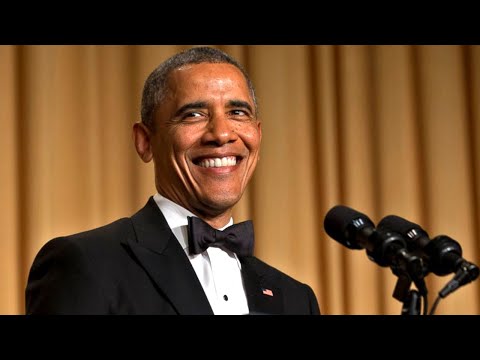
At the time, our current president was in the middle of his birtherism crusade, and our former president had released his Hawaiian birth certificate, hoping to put an end to the issue. Obama didn’t hold back—mocking Trump’s belief in conspiracy theories, his reality television show, his political aspirations. “Say what you will about Mr. Trump, he certainly would bring some change to the White House,” Obama said, in a tone that is now chilling to listen to. Adam Gopnik recalled Trump’s reaction:
Trump’s humiliation was as absolute, and as visible, as any I have ever seen: his headset in place, like a man in a pillory, he barely moved or altered his expression as wave after wave of laughter struck him…. If he had not just embarked on so ugly an exercise in pure racism, one might almost have felt sorry for him.
This is not to fault Obama—he was performing at what is essentially a roast. Still, we would be remiss not to remember a lesson in evidence that night and at many points in the 20th century: that shame is a base ingredient in the cocktail of populism and fascism. If President Trump is not a fascist, he is undoubtedly a populist and poses a unique threat to our core democratic institutions.
And that is exactly why liberals should stop watching John Oliver.
“Last Week Tonight With John Oliver” returned to HBO on Sunday, with its satirical sights set on a presidency that considers comedians and journalists alike to be political adversaries. President Trump is clearly bothered by depictions of his on “Saturday Night Live,” as evidenced by the president’s Sunday morning tweets.
.@NBCNews is bad but Saturday Night Live is the worst of NBC. Not funny, cast is terrible, always a complete hit job. Really bad television!
— Donald J. Trump (@realDonaldTrump) January 15, 2017
In a time of fake news and alternative facts, Oliver and his team will surely be tempted to double-down on their investigative-journalism, fact-driven brand of a comedy show. But it will be terrible for our public discourse.
Oliver continues in the tradition of Jon Stewart, adding reinforcements to the “liberal” bubble. He coddles his viewers by convincing them (as if they needed more convincing) of how right they are, how wrong they are, how many more facts they know than them. The visual assault of fact after fact without any time given to admit the weak points in his argument robs his viewers of the opportunity to think, or have any deep understanding of an issue. Worse, the false sense of solidarity that comes with sharing an Oliver segment on Facebook is an invitation to apathy not resistance.
True, Oliver has had wild success—even in influencing policy. It’s likely that the legion of comments Oliver sent to the FCC killed a proposal threatening net neutrality. But, then, he just couldn’t make Donald Drumpf again, no matter how many clickbait headlines claimed the comic destroyed/eviscerated/ended Trump’s presidential prospects.


Those who supported Trump voted for him for a variety of reasons. But a common explanation is the way that large swaths of the country, and their way of life and thinking, were constantly overlooked and looked down upon by those in Washington, Hollywood and their liberal relatives on Facebook. But many supported him reluctantly—and one way to turn a reluctant Trump voter into a President Trump apologist is to share a 20-minute takedown of an opinion they hold by a falsely self-deprecating Brit. “Keep reminding yourself: This is not normal,” Oliver told his audience after the election. “Because a Klan-backed, misogynist Internet troll is going to be delivering the next State of the Union address—and that is not normal.” The same shame that might have pushed Trump to run will be the shame that pushes his supporters to defend indefensible policies.
Some will say, as Jon Stewart often would, that Oliver is only a comedian. He is not a journalist or politician. But journalists, politicians and comedians alike would do well to learn that they not only reflect society and its discourse—they shape it.
This article is part of our Point/Counter-Point series. For a contrasting perspective check out John Oliver: Comic Crusader Against the Status Quo
This article appears in March 20 2017.


 Politics
 Faith
Faith Culture
 Vatican
 Scripture
 Podcasts