


In a letter to the Chilean bishops at the end of a three day summit, Pope Francis thanked them for joining him in asking heartfelt pardon of the victims and in making a firm resolution to repair the damage done to them.
He also thanked them “for the full availability (disponabilidad) that each one has manifested to adhere and collaborate in all those changes and resolutions that we will take in the short, medium and long terms, [which are] necessary to establish justice and ecclesial communion.”
He had called the bishops to the summit to discern together what measures need to be taken in the short, medium and long terms in the Chilean church following the abuses of sex, power and authority in that church in these last years.
“History is being made. We are at a particular moment for the universal church, not only for Chile,” one monsignor said.
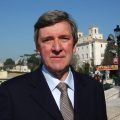
Pope Francis concluded his extraordinary summit meeting with 34 Chilean bishops, including two cardinals, on Thursday evening. “History is being made. We are at a particular moment for the universal church, not only for Chile,” Mgr. Jordi Bertomeu, who accompanied Archbishop Charles Scicluna to Chile to listen to the victims, told reporters. He said to expect “important measures” to be taken soon.
A spokesman for the Chilean bishops, Bishop Fernando Ramos, auxiliary bishop of Santiago and secretary-general of the conference, told the press this afternoon that they would hold a press conference tomorrow and would give a concluding statement. He said “we are satisfied and serene” with the summit “but like the pope we are very sad.” The conference is expected to be held at 12:30 p.m. Rome time.
Francis met the bishops for the first time at this summit on May 15. Like a Jesuit retreat master, he read a text to them that he had prepared, the contents of which have not been revealed. He gave a copy of the text to each one at the end of an almost one-hour talk, and then invited them to spend the time between then and their next meeting with him on May 17 “in reflection and prayer.”
His second encounter with them on what the Vatican, in a statement on the eve of the summit, called “a long synodal journey,” took place on May 16. It took the form of a dialogue in which several bishops spoke, according to one of the Chilean participants. Francis had two additional face-to-face encounters with them today: one in the morning and the other this evening. At the pope’s request, Cardinal Marc Ouellet, the prefect of the Congregation for Bishops which oversees the selection of bishops and formation of new dioceses, was present at all three meetings.
This summit was convened by Francis after receiving the 2,300 page report of the envoys—Archbishop Charles Scicluna and the monsignor—that he had sent to Chile in February to listen to the victims of abuse by Father Fernando Karadima, whom a Vatican tribunal found guilty of these crimes in 2011. The victims accused Bishop Juan Barros of Osorno of being present when the abuse happened and covering it up, though he denies it and, up to then, Francis had staunchly defended him. After receiving their report, the pope first invited the three victims—Juan Carlos Cruz, James Hamilton and Jose Andrés Murillo—to meet him in the Vatican, and at the same time he summoned the bishops to a summit meeting to take place after that.
The Spanish monsignor advised the journalists from various news outlets from Chile and other countries this morning “to expect some measures in a short time. The Pope is a man of his word and if he has said that he would [take such measure], he will do so.” He added that “this is necessary.”
“We are at a particular moment for the universal Church, not only for Chile,” he added. It is “not normal” for the pope to convoke an entire bishops conference, he said. He distinguished this summit from the earlier ones called by St. John Paul II and Pope Emeritus Benedict XVI in relation to the abuse of minors by clergy in the United States and Ireland respectively.
John Paul II summoned the U.S. cardinals to Rome in 2002, at the height of the abuse scandal which was made public by The Boston Globe, and they met with him and senior Vatican officials. Benedict XVI called the Irish bishops to Rome in 2009 in relation to a similar abuse scandal that had been brought into the public arena by public judicial investigations at the request of the Irish government.


Monsignor Bertomeu explained that while all three situations related to sexual abuse, the Chilean case differs from the other two because it has “characteristics of abuse of power and authority that make it somewhat special,” whereas this element was not so present in the U.S. and Irish cases. In fact, Pope Francis, in his letter on April 8, highlighted a triple abuse in the Chile case: “the abuse of power, the abuse of sex, the abuse of authority.”
The Vatican on May 12 said the pope would not comment during or after the summit as he considered the conversations confidential. Two Chilean bishops, speaking to the press on behalf of the hierarchy on May 14, said they too would respect the confidentiality of the encounters.

 Politics
 Faith
Faith Culture
 Vatican
 Scripture
 Podcasts