• Subscribe
  • Log in
  • My Account
  • Politics
    • Opinion
    • Editorials
    • International
    • U.S. Politics
  • Culture
    • Books
    • Film
    • TV
    • Ideas
  • Faith
    • Faith in Focus
    • Faith and Reason
    • Prayer
    • Spirituality
    • Jesuitical Podcast
  • Vatican
    • Vatican Dispatch
    • Vatican News
    • Pope Leo XIV
    • Inside the Vatican Podcast
  • Scripture
    • Scripture Reflections
    • The Word
    • The Good Word
    • Preach Podcast
  • Podcasts
    • The Spiritual Life
    • Jesuitical
    • Inside the Vatican
    • Preach
    • Hark!
    • All Podcasts
  • Magazine
    • All issues
  • Donate

Sections

  • Politics
  • Faith
  • Culture
  • Vatican
  • Scripture
  • Podcasts

More from America

  • Podcasts
  • Video
  • Newsletters
  • Events
  • Voices
  • YouTube
  • Mobile App
  • About Us
  • Careers
  • Contact Us

Print Edition

November 2026

November 2026

Past Issues

November 2026

Current Issue
  • Facebook
  • X
  • YouTube
  • Instagram

Sections

  • Politics
  • Faith
  • Culture
  • Vatican
  • Scripture
  • Podcasts

More from America

  • Podcasts
  • Video
  • Newsletters
  • Events
  • Voices
  • YouTube
  • Mobile App
  • About Us
  • Careers
  • Contact Us

Print Edition

November 2026

November 2026

Past Issues

November 2026

Current Issue
  • Facebook
  • X
  • YouTube
  • Instagram
Skip to content
  • Donate
America Magazine

America Magazine

The Jesuit Review

  • Subscribe
  • Log in
  • My Account
Subscribe
  • Politics
    • Opinion
    • Editorials
    • International
    • U.S. Politics
  • Culture
    • Books
    • Film
    • TV
    • Ideas
  • Faith
    • Faith in Focus
    • Faith and Reason
    • Prayer
    • Spirituality
    • Jesuitical Podcast
  • Vatican
    • Vatican Dispatch
    • Vatican News
    • Pope Leo XIV
    • Inside the Vatican Podcast
  • Scripture
    • Scripture Reflections
    • The Word
    • The Good Word
    • Preach Podcast
  • Podcasts
    • The Spiritual Life
    • Jesuitical
    • Inside the Vatican
    • Preach
    • Hark!
    • All Podcasts
  • Magazine
    • All issues
Posted inLast Take

‘We the People’: How the Constitution calls us to a common purpose

Avatar photo by Gregory Kalscheur, S.J. October 8, 2026October 8, 2026

Share this:

  • Share on Facebook (Opens in new window) Facebook
  • Share on X (Opens in new window) X
  • Email a link to a friend (Opens in new window) Email
Photo of the US Constitution, centered on the phrase "We The People"
Credit: iStock/webking

Back in the days before deaning distracted me from actually doing legal scholarship, I used to spend a lot of time thinking about the meaning of particular provisions in the U.S. Constitution. I confess that I didn’t devote a great deal of thought to the preamble, but at this moment in our nation’s history, I find myself increasingly drawn to that opening sentence: “We the People of the United States, in Order to form a more perfect Union, establish Justice, insure domestic Tranquility, provide for the common defence, promote the general Welfare, and secure the Blessings of Liberty to ourselves and our Posterity, do ordain and establish this Constitution for the United States of America.”

James Wilson played a central role in drafting these words, and in his recent book on Wilson, The Lost Founder, the journalist Jesse Wegman suggests that this sentence may be the most famous verse in what he calls “America’s civic poetry.” Mr. Wegman also describes “we the people” as “the three most resonant words in the history of democracy.”

While technical legal language makes up much of the text of the Constitution, the civic poetry of the preamble helps us to understand the central purpose of the document and the goal of the entire constitutional project. During what can often feel like a particularly fraught and fragile moment in our constitutional history, we should hear the poetry of the preamble as words that shape who we are—and also as a challenge that demands a response from us.

“We the people” are the foundation of this constitutional republic. The preamble calls us to remember that the constitutional project is not the work of atomistic individuals caring only for their own polarized and partisan interests. Instead, we are connected to one another as a political community in our shared commitment to a fundamental purpose: to promote the general welfare.

I suggest that we might understand promoting the general welfare as a way of talking about what the Catholic social thought tradition calls promoting the common good: working together to build a community characterized by institutions, structures and civic virtues that recognize and protect the inherent equal dignity of the person and allow all persons (not just all citizens) in the community to flourish in the fullness of their equal human dignity. A more perfect union, justice, domestic tranquility, the common defense and the blessings of liberty are all essential components of that general welfare or shared common good.

We often think about the Constitution as a document that protects a set of fundamental rights, and it certainly does do that. Important as the courts and the judicial process have shown themselves to be in protecting both those rights and our commitment to the rule of law, the civic poetry of the preamble reminds us that the Constitution is about more than judicially enforceable rights. The Constitution calls us (“we the people”) to recognize that we have not just constitutional rights but also constitutional responsibilities.

We share a responsibility to work together to promote the general welfare, to build a common good. The work of the constitutional project belongs to all of us; it is not simply or even primarily the work of judges and justices, or presidents and members of Congress. And a call to recommit ourselves to promoting the general welfare or the common good should not be understood as a call to empower judges or other officials to impose some sort of blueprint for the general welfare or common good on the rest of us.

Instead, the Constitution creates structures and institutions and protects basic rights that empower all of us, we the people, to argue about, deliberate over and democratically decide a fundamental question: What will most effectively promote the general welfare at this moment in our history—and what will most effectively allow all persons in our national community to flourish?

We the people have ordained and established a Constitution that empowers us to argue about, deliberate over and democratically decide always-evolving answers to that fundamental question. At this moment in our constitutional history, are “we the people” willing to carry out our shared constitutional responsibility to do that?

⸺

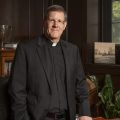
Gregory Kalscheur, S.J., is the dean of the Morrissey College of Arts and Sciences at Boston College, in Chestnut Hill, Mass. This piece is adapted from remarks given at Boston College on Constitution Day, Sept. 17. 

This article appears in November 2026.
Related

  • Share on Facebook (Opens in new window)Facebook
  • Share on X (Opens in new window)X
  • Share on Mail (Opens in new window)Mail
Tagged: Catholic Social Teaching, US Politics
Avatar photo

Gregory Kalscheur, S.J.

Gregory Kalscheur, S.J., is the dean of the Morrissey College of Arts and Sciences at Boston College, in Chestnut Hill, Mass. This piece is adapted from remarks given at Boston College on Constitution Day, Sept. 17.

More by Gregory Kalscheur, S.J.

More from America


St. Louis archdiocese sues DHS and ICE to bring sacraments to immigrant detainees

St. Louis archdiocese sues DHS and ICE to bring sacraments to immigrant detainees

Why the Catholic Church still struggles to minister to families

Why the Catholic Church still struggles to minister to families

For Martha, Last Passenger Pigeon, 1914

Classifieds

Your source for jobs, books, retreats, and much more.


  • One Heart, One Soul Spirituality Center
  • Jesuit Spiritual Center at Milford
  • Manresa Jesuit Retreat House
  • Servants of the Holy Heart of Mary • Nazareth Spirituality Center
  • Change our hearts; orient us toward peace

See all classifieds

Most Popular


‘We have much to learn from families’: Pope Leo welcomes bishops to ‘Amoris Laetitia’ meeting
Does a light show at St. Patrick’s Cathedral deliver transcendence? You decide.
Days after Pope Leo’s visit, riots erupt in Paris
An invitation: proper dress required
Australian bishop sentenced to 6.5 years in prison for abuse of Aboriginal men

America Today

Your daily guide to the most important stories from the Church and around the world - delivered to your inbox each morning. See more newsletters

November 2026

November 2026

Faith. Culture. Perspective

Support a trusted Catholic voice at the intersection of the Church and the world.

Subscribe

Politics

See all


Church in Argentina remembers martyrs as Milei administration downplays ‘dirty war’ atrocities

After botched execution in Tennessee, Catholics pray for the end of the death penalty

Global Catholic charity head says they’re doing ‘less with less’ after Trump’s foreign aid cuts

Faith

See all


What blessed Stanley Rother and Pope Leo XIV share

To understand Christian hospitality, look to the host

The Very Young Catholics project: How one book series shares children’s stories from around the world

Culture

See all


Finding a Lenten vulnerability in Rilke’s ‘Letters to a Young Poet’ 

Review: The ‘Scopes Monkey Trial’ and church-state tensions

Rob Reiner’s gift: Finding humanity—both on and off the screen

Vatican

See all


Indian Cardinal Filipe Neri: ‘there is no ‘single stereotype of an ideal family’

Swiss Guard to mark 500th anniversary of the Sack of Rome

‘We have much to learn from families’: Pope Leo welcomes bishops to ‘Amoris Laetitia’ meeting

Scripture

See all


Praising the name of the Lord

Mary is the example par excellence for all of us

The importance of rules—and freedom—for St. Paul

Podcasts

See all


What it means for Catholics to ‘let your conscience be your guide’

‘Amoris Laetitia’ at 10: The history, tensions and why Pope Leo wants to revisit Francis’ signature document

French Catholicism Reborn? What happened on Pope Leo’s visit to France (and why it matters for all of us)

Sections

  • Faith
  • Culture
  • Scripture
  • Politics
  • Vatican
  • Podcast

About America

  • About Us
  • Careers
  • Writing Guidelines
  • Privacy Policy
  • Contact Us
  • Jesuit Vocations

More

  • Donate
  • Subscribe
  • Advertise
  • Classifieds Directory

America Today

Your daily guide to the most important stories from the Church and around the world - delivered to your inbox each morning. See more newsletters

Sign up
  • Facebook
  • X
  • YouTube
  • Instagram
© 2026 America Press Inc. | All Rights Reserved. Powered by Newspack
  • Donate

Gift this article