An ordinary Sunday morning. No parish assignment, no preaching. So I decide to go to a church that celebrates the Latin Mass every Sunday at 11 AM. I knew it would be in Latin, but I wasn’t sure if it would be the old Tridentine or new post-Vatican II Latin Mass. Clearly it was Tridentine! One reason to attend was to see if I could feel comfortable being the main celebration of the Latin Mass.
The church was half-filled, older men and women, some families with children, and a number of people in their 30’s who followed with their missals. The music, all in Latin, was in abundance with 90 percent sung by the choir and little by the congregation. The opening procession included 8 servers in surplices (all male), an assistant to the priest and the main celebrant.
In most churches this Sunday would be the 6th Sunday in Ordinary Time, but following the old liturgical calendar, it was Sexagesima Sunday. The priest wore purple vestments, and a purple cope since it began with the Asperges. On the altar were six large candlesticks, 3 altar cards, the missal stand with Missal and the covered chalice. Incense abounded at the beginning, at the gospel and the preparation of the gifts.
The Kyrie was sung. After the opening prayer the readings were chanted by the priest in Latin from the pre-Vatican II, 1962 Missale Romanum for Sexagesima. The celebrant ascended the pulpit and read the two readings in English using an old translation, probably the Douay version, with “thy” and “thee." He preached for about 10 minutes.
The Creed followed, in Gregorian chant with choir and congregation alternating. The priest said the creed privately. He finishes and sits and listens with the congregation while choir continues. There is no prayer of the faithful. The offertory prayers are not heard at all by the people. Then incense over the gifts, the celebrant, servers and congregation. At the Orate Fratres, only the servers respond, even if the congregation knows the response in Latin. Then the lengthy preface of the Trinity, traditionally used for Sunday Masses.
The Sanctus is sung by the choir, while the priest continues with the Roman Canon which the people could barely hear. Before the words of institution, the priest stops and waits so the Sanctus can be completed. After the institution (with incense and bell ringing) the choir sings the Benedictus while the priest continues the canon up to the great Amen. Again he waits until the choir has finished singing.
Although the altar servers remain kneeling, the people stand for the Pater Noster. (I suspect that the congregation should have remained kneeling too, but maybe that is one effect of the new liturgy that has strangely carried over to the old.) No greeting of peace. The Agnus Dei is sung. The servers recite the Confiteor, and the priest turns and says the prayer over them asking for forgiveness of sins. The priest holds up the host, “Ecce Agnus Dei”, followed by the triple fold response by the people: “Domine, non sum dignus.”
Communion is distributed at the altar rail, kneeling, and only on the tongue.
After the postcommunion prayer, the priest turns, blesses, and sings Ite Missa est. He moves to the left and recites the last Gospel, the prologue of the gospel of John. The priest and servers exit. Somewhat to my surprise since the liturgy had been so faithful to the pre-Vatican II Mass, there were no Leonine prayers.
REACTIONS. During the celebration I felt very uncomfortable. It was strange and foreign. Even though I was very familiar with the Tridentine Mass from my childhood, it seemed remote and distant. The Mass seemed to focus on the priest whose words for the most part could not be heard (they were in Latin anyway!) and who rarely faced the people. The choir performed well and their singing overrode the priest, who had to wait several times until they finished singing.
In my mind I could not but think back to the Second Vatican Council, and all that the Council and subsequent documents tried to bring about – active participation, emphasis on the important things, vernacular, elimination of accretions and repetitions, etc. It was sad and disheartening. What happened? Why would the Catholic faithful seek out and attend this older form of the Mass? Is the Tridentine Mass an aberration? What does it say about the reforms of Vatican II?
After the Mass, I was tempted to talk with some of those present. But I decided not to as I feared I would have been negative and perhaps controversial. My feelings were still very raw. One thing I know: I myself will never freely choose to celebrate the Tridentine Mass.
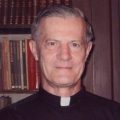
Peter Schineller, S.J.


Comments
It seems that you do not believe that the mass should reflect what Jesus actually taught through his life and his words. And apparently you also believe that the mass should be equated with various cultural institututions - churches and cathedrals as free music halls and museums, and palaces that people can walk through and be in awe of all that ostentatious wealth.
But, perhaps instead the homeless man would be comforted to know that Jesus did not live like a king, with gold and silk and jewelry and palaces. It might comfort him to know that Jesus was a poor man, like himself, and that Jesus understands his life, that Jesus' parents also were homeless, and so he was born in a stable or a cave. Luke could have had Jesus be born in a palace, but he did not - why not? Because this gospel, like all of them are pointing to a deeper truth, to something we are to learn. So maybe you should think this through a bit more, reflect a bit more on the choice of symbols in the story of Jesus's life and those he chose to use in his parables and teachings. The Jewish people expected the messiah to arrive in triumph - a secular leader, wrapped in glory and power and wealth - in other words, by all that is symbolized in elaborate cathedrals, by dressing hierarchy in gilded vestments with 40' silken trains, by having gold vessels, etc. So they did not recognize Jesus as their messiah because his message was the opposite of what they expected. They were looking through the secular lens, but Jesus turned it all upside down, and taught us that these trappings of wealth and power are exactly what we should be avoiding, rather than seeking.
I agree with those who believe that the mass should reflect would Jesus taught us in his words, and especially in how we live. There is much truth in Cate's observation that Jesus did not hold himself above others, he was always with them, seated at the same table, sharing the same food, speaking in the language they all shared.
The reason is because the Old Mass clearly demonstrates what the Church actually believes goes on at Mass. I once found an old Baltimore Catachism and read it and when I asked my Novus Ordo priest why we do such and such at the new mass when the Catachism says this.... he just rolled his eyes.
Also, I attend the Old Mass because I don't have to worry about having my faith challenged each week. In the past I would worry what the priest might say now that we no longer have to believe.
Attending the Old Mass and socializing with traditional catholics let me avoid all the church controversies and liturgical wars. I can pray with confidence that I have a valid and holy and pleasing mass, a doctrinally sound catachism and fellowship with likeminded catholics that do not question what the Church teaches on any serious issue. This means I can better progress in the spiritual life and hope to attain sanctity.
Of course my chapel has it's share of weirdos, including myself, but I do know Our Lord is there and I can pray to Him each Sunday knowing He is pleased with this tried and true Sacrifice and that I am not compromising on His teachings for the sake of making peace with the modern world or making my pew more comfortable.
Im a big fan of St Francis Xavier, there's a priest with guts, to use a polite phrase!
Im sitting outside the church actually typing this on my phone. For me Catholicism is more about sandstorms and shipwrecks then Latin and tassels so St Francis Xavier is the saint for me. I have to laugh when I think of all the shipwrecks so many saints survived, what they must think of our soft gadgety culture!
God bless!
I know it's not polite to say this, but when I looked at this photograph, the first word that came to mind was ''idolatry.'' It seems to me that people can go to the theatre and museums and places like the castle in Downton Abbey if they want to see gilt and displays of worldly wealth and hear a professional choir sing Mozart and be an audience. Churches should be simple and reflect the settings of Christ's life and the simplicity we are to seek. He was mostly outdoors - in nature - on riverbanks, in the desert, in the mountains. Perhaps that's why so many people say they feel closeste to God in nature. These places are God's cathedrals and so much more awesome than the over-gilded palaces and museums built by men. Jesus found God there. He didn't spend much time in temples. He warned about wealth and ostentatious displays of wealth by the religious leaders and ostentatious displays of public piety also. He also taught in people's homes, around a table, sharing the meal. He told us to do the same. He didn't say to go to castles and gild everything with gold and have a priest put on a performance for an audience in a museum setting. And he taught them in their own language. At his last dinner with his friends, he didn't stand on an altar and exclude them from the prayers, turning his back on them. He sat with them at the same table, and he invited ALL to do this in memory of him. He didn't exclude anyone - not even Judas.
Last time I was at St Kevin's Harrington St. (18 months ago) they were packing them in. Gardiner St. is a beautiful church. My favorite Dublin church. Whenever I visit there I can sense Matt Talbot and all of the great Belvedere Jesuits who were there over the years. Is Fr. Donal Neary still the PP there?
"O most lovable and loving Saint Francis Xavier..." I wonder have the Jesuits found any Caravaggios on Leeson St. lately?
Do we reallt think that G_D cares about this?
While the house (church) is burning, does it make sese to argue about new wallpaper for the living room?
The priest isn't officiating at a banquet or some sort of "table," but leading the Congregation to God. His role is that of "alter Christus," a meaning largely lost by far too many priests reared on the Ordinary Form. There isn't a need for a "sign of peace" because the Confiteor is prayed before the priest even sets foot into the Sanctuary. That is our "sign of peace," our making our peace with God before approaching the Holy of Holies.
The people don't HAVE to listen, sing, utter responses in order to Participate. Mental and spiritual engagement with the Mystery is more than sufficient - And, let's face it, Father, too darned many people don't know the difference between Participation and being entertained, any more. They think they have "particiapted" at Mass because their mouths and hands have done things, when their real attention has been far removed from the Liturgy.
Finally, I have to wonder what Father was really afraid of, that he would not ask the Faithful what they got out of that Mass. Perhaps it was a fear that his own prejudices might find an intelligent and Faith-Filled challenge?
You are greatly mistaken Father. The Mass is most definitely focused on God. It is YOUR preferred Mass which is focused on the priest as entertainer and the congregation as entertained...unless snoring through a typical homily devoid of spiritual nourishment.
How truly sad it is to read such a disdainful and humanistic analysis of the majesty which is the Mass dedicated to the worship of God through the Sacrifice of our Lord.
Poor Saint Ignatius! His own prodigy so proud...so blind.
I have gone to the ancient Mass celebrated according to norms set before teh Council where the laity make all the responses including Mass parts and the proper parts and the readings are in the vernacular all in accord with the motu proprio Summorum Pontificum and the congregation is of various ages. All in all active participation means that one unites onself mind and heart with the sacred action and I suspect more of that goes on at the Latin Mass than in many of the vernacular Masses. Moreover the same Council intended Latin to be the language for any future reform with more vernacular being used than before. Fr. Schineller does not ask the question why did something else take place? The focus indeed is on the priest who acts in the very person of Christ to whom the laity join exercising their share in the priesthood! It's all there, Father Schineller and without the abuses that plague the Novus Ordo where the focus is on the priest and congregation turned inward to theselves a criticism the Pope has offered. I suggest Father if he has not done so read the papal criticisms of the reform and maybe the Latin Mass won't be so strange.
At 73 yrs. I well remember the Latin mass. I even sat (& knelt) through baroque ceremonies like the faldstool mass of a prelate in the presence of a greater prelate, and solemn high masses in the presence of a prelate vested in cope and miter at the throne.
But most of all I remember the soul-killing daily sung masses for the dead (when permitted by the ordo), sometimes up to six a week! These were always sung in Gregorian chant, complete with the ''Dies irae.'' The only exception was the gradual and tract, sung to a psalm tone. (Many of us survived by opening our St. Andrew missals to the proper mass of the day, or the liturgy of the previous Sunday). But, all-in-all, I suspect that for most of the attendeesit was the rosary or devotional prayers from a prayer book. And we always brought those masses in at about 25 minutes.
I have no desire to go back there.
Nor do the idealizers remember the Masses where a priest occasionally did a homily? We had a priest who always turned around after the gospel and homilized, to the chagrin of those who had hoped for a quicker Mass.
I do agree that it was time to end the experimentation that folks did under the now well-understood and specious claim that it was all being done in the spirit of Vatican II.
While I don't agree with the spirit of what Fr Schineller wrote as it seems to me that he is just a stuck-in-the-mud liberal I think that you show little understanding of St Ignatius.
St Ignatius it was who broke all tradition in getting his Priests from having to sing the Daily Office.That was a massive deal back then but it was low on St Ignatius's priorities.
He was utilatarian in spiritual matters"Whatever gets the job done!" or whatever brings souls to God.
The Tridentine may do that for some but there are many who are left cold by it.
Ignatius would have most likely done what Pope Benedict and had a plurality of celebrations to help everybody.
I dislike both of them as they both contain way too much Priest for my liking.The best Mass I have been to is the Jesuit Mass in Rome at the Gesu side chapel or the early Mass at St Maria Sopraminerva with the Dominicans .Simple,sober and solemn.In and out in 20 minutes and spiritually recharged . Less is more in my book and Jesus is centre stage!
Maybe Saint Aloysius Gonzaga would agree with you. Probably not.
Maybe Saint Francis Xavier would agree with you. Probably not.
Looks like, Father Schineller, you are much, much smarter than all of the Jesuits before you! Somehow they never dreamed of fighting for what is now a banal, 40 year old service based on anglican/protestant developments since the founding of your order.
P.S., Father - Mass is not about thee, thee, thee. It's about Thee, Thee, Thee.
"AT LEAST keep the Kyrie...at least give them THAT much Latin!!!".
There was silence, and then uproarious laughter.
Or so the story goes...
If anyone knows the source of this legend, please let me know. It's driving me crazy that I can't remember where I read it!!!
I just re-read Thomas Day's WHY CAHTOLICS CAN'T SING. A funny, insightful book on why the usual was the English-language Novus Ordo occurs isn't quite right and a return to the Tridentine Mass definitely isn't the way to go.
Thank you for your perspective. It was an eye-opener, highly informative for me.
Somewhere there has to be a meeting place, a sense of all times and people who have gone before us and upon whose shoulders we stand, that foundation we call the Church and its tradition, and the current and unique requrements of the time in which we live. We need not necessarily expect "O Magnum Mysterium" to communicate fully what it once did, but we must also be mindful that "Yo, Big Mystery!" won't get the job done.
A couple of folks said it here already, but it bears repeating. The Holy Sacrifice of the Mass isn't necessarily about making us feel good. It's an awesome, mystical ritual of bringing Calvary into our very midst. All of us, celebrant and congregation , focused on the sacred Mystery, rather than inward, facing ourselves. The reverence, and meticulousness of the ritual. Receiving the Eucharist kneeling, with a paten under our chin "lest He strike His foot against a stone." To me, the Latin on intensifies the quality of Mystery and sacredness.
I've been to only a handful and probably would attend more, but celebrations of the Eatrordinary Form has become scarce in our Diocese. I've no real issue with Mass in the vernacular and I personally have never experienced "clown mass"-type irreverence.
What bothers me is the politics and animosity the very existence of the Tridentine Mass seems to cause; I've had to defend myself from other progressive Catholics for supporting such an antiquated, exclusive, elitist ritual. And the traditional Catholics I know generally are of an ultra-Conservatove mindset, and can't imagine how I could ever go back to a vernacular Mass.
The Latin Mass can't and shouldn't be made the Ordinary Form of the Mass again...but IMHO, it has its place in our Church and it ought to be celebrated.
Why do you feel that need? Have you thought about that at all - the reasons you seem so intent on imposing your reaction to the two forms of the mass on others?
Why do you say people are ''afraid'' of the TM? What gives you that idea? I grew up with the TM. Nobody was afraid of it, mostly they were bored because they simply sat there watching passively, or reading a missal. Since most can read faster than the priest could mumble with his back to the congregation, there was ''dead'' time and a lot of people prayed the rosary (not the right time or place) or simply daydreamed until it was over. Every now and then we got to say ''Et cum spiritu tuo'' or ''Amen.'' That was it. I'm guessing your experience is exlusively with the ''high'' mass, with chants and bells and smells. But, when the TM was the norm, high masses were celebrated only on special occasions.
Everyone does celebrate the ''same'' mass today and are ''united'' in the form. Some celebrate it in English and some in Spanish and some in Mandarin but it is the same mass. Nobody in the entire world has Latin as their native tongue - it is foreign to all.
Also, unlike Mr. Dumakaitas's assumption, we ''old'' folk (I grew up with the TM - the change to English occurred somewhere around the end of my college years) did NOT know the Latin mass ''better'' than people know the NO. They knew it less - it was in a foreign language. Nobody knew the prayers unless they read them out of the book. My children knew all the prayers by heart when young. We old folk never knew the prayers by heart except for the two brief responses we were permitted. Without a missal we would be hopelessly lost as to where we were in the mass and what was going on. Mass on Sunday was the height of boredom. And you are a bit confused about mass and lectio, which are two totally different things - the mass is not intended as an occasion for lectio. The changes in liturgy were made for a reason - the bishops knew that the people were not involved in celebrating the mass as community - and they changed it so that ALL in the community would be active participants, not silent and passive members of an audience watching a stage production on the altar - a stage production in a foreign language so they had to read a book to follow.
Those who like this are quite welcome to it. But for those of us who, like Fr. Shineller, have no desire to return to this particular version of the mass which we knew very well, please stop trying to impose your preference on everyone else. There is nothing ''sacred'' about Latin. It is a language once used in the world and now dead. Latin was not the language of Christ or of the apostles or of the early church communities. They met together and they used their own languages when they came together to pray and learn and share the bread and wine. Unless they were Roman, they did not use Latin. It came into regular use in the church after the church entered into its too-close and unholy partnership with the Roman empire - it was the language of those who murdered Christ. The bible was written in Greek. People spoke Latin at one time if they lived in parts of the Roman empire - they don't now. The attachment to Latin seems a bit ludicrous on multiple levels, but if some like it, feel free to go to a Latin mass - just leave everyone else out of it.
I am 46 and do not remember the Old Mass.
But I attend it regularly now.
My reflections. I HATED THE TRIDENTINE MASS the first 4 times I went.
So why did I keep going back? Because I'm an historian. I figured, this is the mass of the past 1500 years basically, so there must be something to it.
Please remember that "Feeling" contrary to 21st century humans, is NOT the highest human faculty. That feeling could be due to ignorance of the Mass, unfamiliarity, so don't put too much into it. Others...non Catholics too, see it for the first time and are wowed by it. SO who's feelings are right? (they're not right or wrong, they're just feelings!)
I find the new Mass HIGHLY clerical, more priest centered than the Old Mass. The old Mass has the personality of the priest diminished so that the symbol of him as an "alter Christus" is more apparent.
Active participation? Father, please remembre that the Latin is "actuoso" poorly translated as "active" the nuance of the Latin is that one should be participating in the Mass, not saying other prayers. One can do this aloud or silently. Sometimes not focusing saying or singing everything (and I do prefer the Dialogue Mass myself), allows one to participate more deeply in the Mass through awareness of the ritual, listening to the chant, or following in the Missal. I GUARANTEE you that most old folks know the Mass better while it was in Latin, than my generation who grew up with the vernacular. The ancient desert fathers knew this because they recommended the monks for lectio, speak softly as they read at the same time. In other words, there is something very passive to simply sitting in the pew and "listening" since humanly, we often drift, even the best of us. The Old Mass knew this instinctively, even before the hand missal, which is why they built the Churches they did.
Lastly, a bit ignorant to put down the Mass that so many English martyrs died for, the Mass that shaped Western culture, the Mass that produced so many saints. Maybe your reflections are proof positive that the Liturgical Reform was a miserable failure. Perhaps the conciliar and post conciliar documents should have started with understanding the theology and rubrics of the Mass first, before it was changed???
There are wonderful forms of silent prayer and devotions for those who want quiet. The mass is meant for the community to worship as a community.
But, those who strongly prefer the Tridentine should go to a Tridentine mass. The rest will go to the ordinary form. There is no need for those who prefer the post-Vatican II liturgy to impose it on those who want Latin and incense, nor is there any reason for those who prefer the TM to impose it on those for whom it is not the most meaningful form of liturgical worship. To each his or her own. One form is not ''better'' than the other.
Not everyone has studied Latin, so instead of ''pax vobiscum'', I will address the majority rather than the minority - Peace be with you!
When it comes to the practice of confession, I get vastly more competent confessors who can deal effectively with scrupulosity and difficulties of conscience in the confessional, because by and large Tridentine Catholics still confess but are not willing to opt out of contemporary American society by refusing to use birth control and having the large families that would result from that particular practice. There are probably divorced-and-remarried Catholics too. Mostly these Tridentine Catholics just mainstream Americans other than happening to attend the Tridentine mass, so they live all the contradictions between official teaching and real life much more acutely than non-Tridentine Catholics. On the other hand, I tend to get terrible pastoral direction from more mainstream priests, I think because for the most part only conservative Catholics confess (so non-Tridentine priests are less experienced overall?) and most mainstream Catholics would never think of confessing in cases where their conscience and a traditional examination of conscience based on the official teachings of the Church differ. So priests who may be less experienced in hearing confessions in the first place may have no experience at all in handling difficulties of conscience. I once confessed to a liberal priest nearing his retirement who said he had never once heard the confession of a scrupulous penitent, which makes it completely understandable that he didn't know how to deal with the situation at all.
There is also a definite undercurrent of (ideally celibate?) gay male homosexuality among many of the participants in the Tridentine mass. Gender/sexuality issues are picked up upon, even without anybody having to be very direct about them, and are generally dealt with in a sensitive and circumspect manner. No ugly stares or confrontations in the pews over being queer or working class or whatever. When I attend mass in more mainstream parishes, I _never_ feel socially welcome. Homosexuality has become such a politicized issue that even where most of the people in the congregation might be supportive in theory, there is a de facto situation where visibly queer people don't attend services and no one is used to seeing them or dealing with them in parishes, so the supportive people are standoffish or confused or whatever and all you end up noticing is that one guy who gives you the evil eye or the people who don't want to shake your hand during the passing of the peace or the fact that you always have a bubble of people not sitting anywhere near you in an otherwise completely full church. This is a whole new level of social awkwardness that most people have no interest in dealing with, and fortunately there are enough queer people (closeted and otherwise) at Tridentine services that you never have to deal with it.
Then there is the beauty of the liturgy. While some parishes have enough resources to do a good job with post-Vatican II liturgy, the results are often very bad. The Tridentine mass usually holds up very well despite a small cast of principal players and a serious lack of money and musical talent in the congregation, because in the end it's very simple to do and requires little additional ornamentation to be done well. One cantor or a small schola can carry the service, and the priest is not on centerstage trying to hold up the entire thing.
With all these benefits, it's difficult not to like Tridentine masses, even for people like me who would prefer to like post-Vatican II liturgy for all the theological reasons Peter Schineller details.
Ordinary Catholics stopped attending because there wasn't enough Latin, not for any other reasons. That sentence is meant to be funny but I guess it isn't.
The connection to Catholics that Paul Coutinho and Richard Leonard have, who I also heard this week, are the future of the Catholic church. Jesuits of their quality are welcome every day of the week in Dublin.
I believe Jesus knew a few words of Greek but that his Latin was a little shaky.
Also the first words of the Mass after the the blessing are ''Intriibo ad altare Dei'' or ''I go to the altar of God'' which emphasizes that this is a sacrifice. I doubt if there were mass Latin Mass attendance there would be this focus.because those who go now are self selecting and not just to fulfill an obligation that to most is meaningless. The Latin Mass is another way of praying and I think anyone who denigrates it says more about themselves than about the Latin Mass and those who attend.
No matter, they have written very well in defense of the Old Mass or the Tridentine Mass.
I have been to that Mass a few times in Rome and found it a strange experience and saw a greater devotion and more transcendental focus on the part of the Priest.The Priest looked more exposed than he does at the Novus Ordo Mass .
As much as I respect the experience of those commentators I wonder if it helps them truly to be more Christlike .
Can a person who engages in such a self-conscious act ever really be as free as Christ was and is? Would any of them consider themselves even in jest as "Drunkards and Gluttons"?.
Is it possible to like this Mass without being guilty of the heresy of clericalism?Think of Cardinal Castrillon , a prime example of a man removed from all that is good and just and in love with the Tridentine Mass.
Again ,I want to thank those who wrote and gave me a little education or at least piqued my interest.
Last Wednesday (March 7, the traditional feast of St. Thomas Aquinas) I attended my first Dominican Rite Mass at St. Vincent Ferrer Church in NYC. It was simply beautiful. The priest who offered the Mass looked as if he were barely 25. He was ordained last year. When I spoke to him after Mass, he said that interest in the Dominican Rite is very high among the younger Dominican Friars in our Province.
If I may speak for traditionalist Catholics around the world Father, I would tell you that we don't want you to be forced into offering this venerable Rite of Mass. But we would ask that you not stand in the way of, or attempt to undermine, others who do wish to offer it, and hear it.
From Campion's comment: <i>He told me that he couldn't believe that people were trying to resurrect this thing from which he and others had tried so hard to liberate us. He died soon thereafter, and when I visited his wake at BC I realized that the look on his face that Sunday at Holy Trinity was perhaps the realization that eventually history might steamroll all he had done to muck with the Roman Rite.</i>
Reading Fr. Schineller's comments and the reaction of Fr. Leonard reported by Campion, it strikes me that the anger felt by many of the 'Spirit of Vatican II' generation reflects a personal sense of finding oneself on the wrong side of history. Though I disagree with them - I personally prefer the Tridentine Mass to the Novus Ordo - I can understand how people like Fr. Schineller would be disappointed that the dreams of their youth have been dashed. My hope is that Fr. Schineller and others like him can learn to accept that the tides of change have simply passed them by.
If you really want to know, at least for myself I can answer in one word: beauty.
I was born after Vatican II and grew up with the new Mass. I'm entirely comfortable with Mass in English and with the changes in the Novus Ordo, and in fact I prefer them.
But, whenever I attend Mass in the Extraordinary Form I am struck by the sheer beauty. Just look for starters at the picture accompanying this article, look at that magnificant high altar! So few are left, so many were torn down and replaced by bland white walls decorated with cheap felt banners.
Next listen to the glorious music. Why oh why did we discard our rich heritage of chant, hymns, motets, and other sacred music in favor of twee shmaltzy pseudo-pop and warmed over 60's folk?
For me the ideal Mass is the Ordinary Form, celebrated in the new accurate English trnaslation, in a church richly adorned with beautiful art, beautiful music, and the beautiful smell of incense. That for me is a foretaste of heaven, which is what the Mass ought to be.
The high masses were a bit more like going to the theatre. The priest is the star of the show, with supporting actors as altar boys, and also the choir. The congregation is again passive - an audience for those on the altar and for the choir. Their role is mostly to watch - not even to listen, as they don't understand the language being used, even if the priest doesn't have his back to them. Yes, they can read the missal in English - but that doesn't take long, and the rest of the time is spent waiting for the show to move on to the next act and then the final curtain, when everyone rushes out to the parking lot, relieved that this week's Sunday ''obligation'' has been satisified. There are little dramatic touches like incense, but this form of the mass is not an experience of a community worshipping together, but a gathering in one place of a lot of individuals and families who are basically watching a performance.
The advantage of the sung High Mass was that it forced the celebrant to intone the Latin clearly. A lot of priests avoided it and stuck to Lows because the Latin was as much Greek to them as it was to the laity, and they could get away with mumbling at a Low Mass.
By the way, the only times we needed more than TWO altar boys were when Benediction was going to follow immediately after Mass (the noon Mass in winter) and on, I seem to recall, Good Friday when a whole slew of us were involved. On Good Friday, the cast on the altar outnumbered the congregation. In recent years of the post-Tridentine era, my parish is SRO on Good Friday, and on Holy Thursday as well. That never happened in the good, old days of Latin.
There is no reason to disparage it. It is a more uncomfortable experience since it is longer and has more kneeling. But then again I appreciate the actual prayers more in the Tridentine Mass and it has a more reverential feel about it. Few are late and no one talks in Church.
if and how it seems like a worshipful exercise for folks who come at it from this era would be an intersting conversation - somewhat like a Kaballah experience?
Pages