• Subscribe
  • Log in
  • My Account
  • Politics
    • Opinion
    • Editorials
    • International
    • U.S. Politics
  • Culture
    • Books
    • Film
    • TV
    • Ideas
  • Faith
    • Faith in Focus
    • Faith and Reason
    • Prayer
    • Spirituality
    • Jesuitical Podcast
  • Vatican
    • Vatican Dispatch
    • Vatican News
    • Pope Leo XIV
    • Inside the Vatican Podcast
  • Scripture
    • Scripture Reflections
    • The Word
    • The Good Word
    • Preach Podcast
  • Podcasts
    • The Spiritual Life
    • Jesuitical
    • Inside the Vatican
    • Preach
    • Hark!
    • All Podcasts
  • Magazine
    • All issues
  • Donate

Sections

  • Politics
  • Faith
  • Culture
  • Vatican
  • Scripture
  • Podcasts

More from America

  • Podcasts
  • Video
  • Newsletters
  • Events
  • Voices
  • YouTube
  • Mobile App
  • About Us
  • Careers
  • Contact Us

Print Edition

November 2026

November 2026

Past Issues

November 2026

Current Issue
  • Facebook
  • X
  • YouTube
  • Instagram

Sections

  • Politics
  • Faith
  • Culture
  • Vatican
  • Scripture
  • Podcasts

More from America

  • Podcasts
  • Video
  • Newsletters
  • Events
  • Voices
  • YouTube
  • Mobile App
  • About Us
  • Careers
  • Contact Us

Print Edition

November 2026

November 2026

Past Issues

November 2026

Current Issue
  • Facebook
  • X
  • YouTube
  • Instagram
Skip to content
  • Donate
America Magazine

America Magazine

The Jesuit Review

  • Subscribe
  • Log in
  • My Account
Subscribe
  • Politics
    • Opinion
    • Editorials
    • International
    • U.S. Politics
  • Culture
    • Books
    • Film
    • TV
    • Ideas
  • Faith
    • Faith in Focus
    • Faith and Reason
    • Prayer
    • Spirituality
    • Jesuitical Podcast
  • Vatican
    • Vatican Dispatch
    • Vatican News
    • Pope Leo XIV
    • Inside the Vatican Podcast
  • Scripture
    • Scripture Reflections
    • The Word
    • The Good Word
    • Preach Podcast
  • Podcasts
    • The Spiritual Life
    • Jesuitical
    • Inside the Vatican
    • Preach
    • Hark!
    • All Podcasts
  • Magazine
    • All issues
Posted inFaith, Washington Front

Pope Benedict’s greatest disconnect from U.S. elites wasn’t about sex. It was over economic justice.

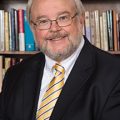
harvard_john_photo by John Carr February 28, 2013

Share this:

  • Share on Facebook (Opens in new window) Facebook
  • Share on X (Opens in new window) X
  • Email a link to a friend (Opens in new window) Email
20221229T1230-OBIT-BENEDICT-1753632
Pope Benedict XVI greets youths at the Missionaries of Charity Peace and Joy Center in Cotonou, Benin, Nov. 19, 2011. (CNS photo/Paul Haring)

Author’s note: One of the missing elements in the overwhelming coverage and commentary on the death of Pope Benedict XVI has been recognition of his leadership and legacy as a teacher of Catholic social doctrine. “Deus Caritas Est” and “Caritas in Veritate” are major social encyclicals. In my work as a leader of justice and peace efforts for the U.S. Conference of Catholic Bishops during Pope Benedict’s years as pope, I found that his writings deepened the foundations of Catholic social thought, strengthened the links between charity and justice and extended the tradition in major ways to care for creation. It also represents a major example of continuity and consistency among John Paul II, Benedict XVI and Francis.

In the following column, published in America immediately after Pope Benedict’s resignation, I suggested “faith in action is an overlooked part of Benedict’s legacy” (“The Pope They Missed,” March 11, 2013). 

On the morning Pope Benedict announced his resignation, I was at a Catholic Charities program for people struggling with mental illness, addiction and homelessness. This example of faith in action is an overlooked part of Benedict’s legacy. In two of his three encyclicals, Benedict taught clearly and eloquently on the duty to care for the poor and vulnerable, declared “justice is the primary way of charity” and placed these obligations at the core of Catholic life: “Love for widows and orphans, prisoners, and the sick and needy of every kind is as essential to her [the church] as the ministry of the sacraments and preaching of the Gospel” (“Deus Caritas Est,” No. 15).

Later I watched news coverage of the announcement, which focused properly on its unprecedented nature, legitimately on the sexual abuse scandals and then predictably on Benedict’s teaching on abortion, same-sex marriage and a male, celibate priesthood. The pope and church were presented as out-of-touch opponents of the sexual revolution. It escapes some that opposing the destruction of unborn children and a redefinition of marriage does not make Benedict a conservative pope, but a Catholic pope. Sometimes I wonder who is more obsessed with sexual issues, the Catholic Church or American television.

Benedict’s greatest disconnection from U.S. elites may not be about sex, but social and economic life.

Benedict’s greatest disconnection from U.S. elites may not be about sex, but social and economic life: His advocacy for the life and dignity of the poorest and most vulnerable, his warnings to avoid military force in international disputes, his groundbreaking call for sacrifice to care for God’s creation and his warnings about “a selfish and individualistic mindset which finds expression in an unregulated financial capitalism.” These themes do not fit into poll-tested political messages about the middle class, the “makers, not the takers” and the avoidance of hard choices and sacrifice.

Washington sees events through its own narrow categories. It is both intrigued and appalled by a quick, secret election without declared candidates, polls or political consultants. At the White House in 2008, Benedict offered a different view:

The preservation of freedom calls for the cultivation of virtue, self-discipline, sacrifice for the common good and a sense of responsibility towards the less fortunate. It also demands the courage to engage in civic life and to bring one’s deepest beliefs and values to reasoned public debate.

Benedict consistently called for defending the lives and dignity of all. He insisted that “charity must animate the entire lives of the lay faithful and…their political activity, lived as social charity” (D.C.E.) and that “the market…must not become the place where the strong subdue the weak” (“Caritas in Veritate”). He taught that the church’s role in public life is inescapable, demanding and limited:

It is not the church’s responsibility to make this teaching prevail in political life.

Rather, the church wishes to help form consciences in political life and to stimulate greater insight into the authentic requirements of justice as well as greater readiness to act accordingly, even when this might involve conflict with situations of personal interest (D.C.E., No. 28).

For secular Washington, Benedict was the pope of no. For those who listened, Benedict is more the pope of and, connecting charity and truth, faith and reason, protection of life and the pursuit of justice, religious freedom and peacemaking, responsibilities and limitations of government and markets, care for creation and care for “the least of these.” For Benedict, there is “one teaching,” both moral and social.

The stories of resurrection I heard at Catholic Charities left me grateful to be a part of a faith community that does such lifesaving work. I wish I were part of a political community that sees our church and its retiring leader through more than issues of human sexuality. Our ecclesial, political and journalistic institutions all need to better reflect the “Caritas…love” that is at the heart of Benedict’s leadership, and now of his legacy.

This article appears in March 11 2013.
Related

  • Share on Facebook (Opens in new window)Facebook
  • Share on X (Opens in new window)X
  • Share on Mail (Opens in new window)Mail
Tagged: Catholic Social Teaching, Pope Benedict XVI, Social Justice
harvard_john_photo

John Carr

John Carr retired on January 1, 2026, from the Initiative on Catholic Social Thought and Public Life at Georgetown University which he founded in 2013. He previously served as Director of the Department of Justice, Peace, and Human Development at the UnitedStates Conference of Catholic Bishops (USCCB) for more than 20 years. He also was a Washington Correspondent for America, Chair of the Board of Bread for the World, and a Residential Fellow at the Institute of Politics at Harvard University.

More by John Carr

More from America


Pope to undergo surgery to remove ‘small, localized lump’ in lung 

Pope to undergo surgery to remove ‘small, localized lump’ in lung 

The death of the American conscience will be livestreamed

The death of the American conscience will be livestreamed

How Bishop Mariann Budde navigates politics in her preaching

How Bishop Mariann Budde navigates politics in her preaching

Classifieds

Your source for jobs, books, retreats, and much more.


  • One Heart, One Soul Spirituality Center
  • Jesuit Spiritual Center at Milford
  • Manresa Jesuit Retreat House
  • Servants of the Holy Heart of Mary • Nazareth Spirituality Center
  • Change our hearts; orient us toward peace

See all classifieds

Most Popular


Pope to undergo surgery to remove ‘small, localized lump’ in lung 
The death of the American conscience will be livestreamed
Pope Leo confirms Cardinal Tagle as Dean of the College of Cardinals
First suicide memorial by a US archdiocese signals a compassionate shift by the Catholic Church
Eugene O’Neill’s inhumane America is still with us today

America Today

Your daily guide to the most important stories from the Church and around the world - delivered to your inbox each morning. See more newsletters

November 2026

November 2026

Faith. Culture. Perspective

Support a trusted Catholic voice at the intersection of the Church and the world.

Subscribe

Politics

See all


St. Louis archdiocese sues DHS and ICE to bring sacraments to immigrant detainees

Church in Argentina remembers martyrs as Milei administration downplays ‘dirty war’ atrocities

After botched execution in Tennessee, Catholics pray for the end of the death penalty

Faith

See all


What blessed Stanley Rother and Pope Leo XIV share

To understand Christian hospitality, look to the host

The Very Young Catholics project: How one book series shares children’s stories from around the world

Culture

See all


Finding a Lenten vulnerability in Rilke’s ‘Letters to a Young Poet’ 

Review: The ‘Scopes Monkey Trial’ and church-state tensions

Rob Reiner’s gift: Finding humanity—both on and off the screen

Vatican

See all


‘Amoris’ participants agree that one major issue is affecting families: Migration.

Pope Leo confirms Cardinal Tagle as Dean of the College of Cardinals

‘Amoris Laetitia’ and its tough questions are here to stay

Scripture

See all


Sitting at a Pharisee’s table

Praising the name of the Lord

Mary is the example par excellence for all of us

Podcasts

See all


Why the Catholic Church still struggles to minister to families

What it means for Catholics to ‘let your conscience be your guide’

‘Amoris Laetitia’ at 10: The history, tensions and why Pope Leo wants to revisit Francis’ signature document

Sections

  • Faith
  • Culture
  • Scripture
  • Politics
  • Vatican
  • Podcast

About America

  • About Us
  • Careers
  • Writing Guidelines
  • Privacy Policy
  • Contact Us
  • Jesuit Vocations

More

  • Donate
  • Subscribe
  • Advertise
  • Classifieds Directory

America Today

Your daily guide to the most important stories from the Church and around the world - delivered to your inbox each morning. See more newsletters

Sign up
  • Facebook
  • X
  • YouTube
  • Instagram
© 2026 America Press Inc. | All Rights Reserved. Powered by Newspack
  • Donate

Gift this article