


A book editor once said to me that she thought comedians were the prophets of the media age. I immediately stole this phrase and put it in my own book. In retrospect, I feel we both were being a tad hyperbolic—her more so than I, since it was her idea.
With that said, there are certain comedians who have had a tremendous impact on our world: Lenny Bruce, Richard Pryor and Dave Chappelle, to name three. Judd Apatow’s documentary, “Norm: The Tale of Norm Macdonald,” recently released on Netflix, documents the life of the controversial Canadian comic who passed away from cancer in 2021. Although Macdonald didn’t quite make the same cultural impact as Bruce, Pryor or Chappelle, perhaps more than any other comic he embodied the voracious quest for authenticity and truth that undergirds the work of all great comedians.
When I was a wee young comic starting off in Chicago at the end of the last century, one of the first lessons I learned was about the importance of truth in comedy. In fact, it was so important that there was an actual book written by improv and sketch comedy legend Del Close titled Truth in Comedy. Essentially the lesson to be taken from this three-word phrase is that in terms of the funny, truth trumps contrivance every time. The lived experience is funnier than anything we can attempt to manufacture from our imaginations. So much of what we find funny comes from identification, our shared experience of what we see and hear on the stage or the screen.
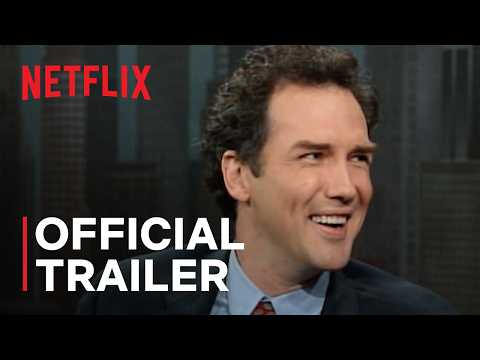
When it came to comedy, Norm Macdonald was a stickler for the truth, though not necessary for the factual truth. “Norm” bears this out, as various friends and colleagues note their lack of clarity regarding biographical details from his life. In his public persona, Macdonald frequently altered his personal history to serve his larger agenda of being painfully honest about what really mattered. Macdonald recognized that the truth is more than facts, and his absurdist, observational humor, while loose with the facts about his private life, was relentlessly scrupulous in his analysis of the world around him—like his take on international relations. The only country that really kept him up at night, he once joked, was Germany—because of their attempts, not once, but twice in the 20th century to go to war with…the entire world!
This is all to say that it is not surprising that the last section of “Norm” focuses on his faith journey, particularly in terms of its relationship to his death. (When he died in 2021, many of his closest friends didn’t know that he had been suffering from cancer for almost a decade.) The same probing desire to seek and find the truth that was a hallmark of Macdonald’s comedy has its origins in the same interior source that compelled him to tweet: “Scripture. Faith. Grace. Christ, Glory of God. Smart man says nothing is a miracle. I say everything.”
It’s clear that Macdonald’s public quest for spiritual and theological insight had no “Come to Jesus” moment. There is no deathbed conversion in Norm’s story. No renouncing of his past. No claiming to be saved. There is no certitude in his pursuit. As another of Macdonald’s tweets reads: “If you want to know if I believe in God, sometime i do and sometimes i do not. Such is Faith.” And that’s what makes “Norm” such compelling viewing: the sheer mundanity of his journey of faith, its sheer relatability. Norm and “Norm” have no answers; they only raise questions.
At over two hours in length, “Norm” provides a comprehensive account of Macdonald’s career, from his early days of doing stand-up on a local college TV station to his time behind the “Saturday Night Live” Weekend Update anchor desk in the 1990s and his subsequent feud with NBC exec Don Ohlmeyer over his jokes about the O.J. Simpson trial, which led to his firing from the show.
Judd Apatow takes a novel approach to the documentary form with “Norm” by opting only to utilize archival footage, photographs and interviews. What that means is no original content (i.e. sit-down talking head interviews or an omniscient voice-over narrator) is used in the documentary. In fact, Macdonald provides most of the narration, as Apatow uses audio clips taken from previously recorded content.
As is fitting for its subject, “Norm” is far from a hagiography: By using prerecorded interviews, the film evades the trap of sentimentality and secular canonization. The reality is that frequently Macdonald went too far with his humor. The shadow side of that relentless pursuit of truth in comedy or just plain truth sometimes caused him to miss the mark entirely and impelled him to make questionable choices both on stage and off, perhaps most notably his public support for both Louis C.K. after he was accused of sexual misconduct and Roseanne Barr after she made racist comments on social media.
But this is part of what makes “Norm” so poignant. It explores Macdonald’s quest for faith as something organically emerging out of who he already was: an incredibly funny man with a unique perspective on the world that never quite knew when to stop. Whether you loved or hated Macdonald as a comic, and I’m well aware there are many on both sides of that stream, “Norm” is a wonderful study in one man’s frequently wayward and oftentimes misguided but always honest search for truth.


 Politics
 Faith
 Culture
 Vatican
 Scripture
 Podcasts