


About a year and a half ago, the vocations office of the Archdiocese of Las Vegas started getting a lot more phone calls.
“I remember telling my assistant, ‘What’s going on, where are all these people coming from?’” said Father Miguel Corral, vocations director and vicar for clergy for the archdiocese. “That’s when it dawned on all of us—the Leo effect.”
It may be too early to tell, but Father Corral believes the election of Pope Leo XIV has led more young men to at the very least consider the priesthood. That includes Latinos.
The Center for Applied Research in the Apostolate profiles the ordination class of priests in the United States each year. Since 2018, the percentage of priests who identify as Hispanic has fluctuated, from a high of 22 percent in 2022 to a low of 12 percent in 2025. The percentages represent between 40 and 70 priests a year.
The uptick Father Corral describes is anecdotal. A rise in interest today may not lead to more ordinations years down the line.
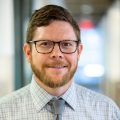
Hosffman Ospino is a professor of theology and religious education at Boston College’s Clough School of Theology and Ministry, where he also directs graduate programs in Hispanic ministry. He is excited by what he hears is happening in Las Vegas but remains cautious. Even if 50 percent of each ordination class going forward were Latino, he said, it would take years to catch up to the nation’s growing Latino population.
“A diocese can come and say, ‘We have a 50 percent increase.’ That means you went from one to two,” he explained. “When you start actually counting heads, that’s when you realize that the numbers remained quite steady.”
Latinos make up an estimated 36 percent of the Catholic population in the United States. So why do they routinely make up less than a quarter of priestly ordinations?
‘Discernment contexts’
Mr. Ospino named a number of “discernment contexts” in which future priests commonly hear the call. They include during primary or high school education at Catholic schools or in service or worship at parishes or campus ministry programs connected to religious orders. Latinos, he said, are underrepresented in all of these contexts.
Many incoming seminarians also say they discerned their calling during family homeschooling, Mr. Ospino said. Yet homeschooling families are typically middle class and educated, he added. These settings, he said, do not fit with the economics of a typical Latino family.
In the past, young Latino men may have also experienced a bit of culture shock at many seminaries. But Mr. Ospino, citing the growing number of Latinos among faculty and in leadership at many seminaries, said things are changing. The point resonated with Father Corral.
“When I was at the seminary, oh my gosh, Mexican Independence Day, we were always allowed to do a celebration with the greater community,” he said. “Our Lady of Guadalupe, you can imagine, it’s a must.”
Archbishop Ronald Hicks of New York, the head of the U.S. bishops’ Committee on Clergy, Consecrated Life and Vocations, said he had many Hispanic classmates in seminary, but few made it all the way to ordination. He entered the minor seminary when he was 14 years old and, after ordination, served as the dean of formation in Chicago for 11 years.
“The sacrifice [that immigrants make] to bring the family to the country comes with a lot of economic pressure,” he said, explaining that children of immigrants often help support their families financially. Yet by the third generation, he said, Hispanic families are better established in the United States and young men feel more free to discern the vocation to the priesthood.
Archbishop Hicks noted Cristo Rey high schools and the Hispanic Catholic Charismatic Center in the Bronx as examples of sites that actively encourage vocational discernment.
In December, Leo issued an apostolic letter, “A Fidelity That Generates the Future,” to mark the 60th anniversary of two documents on the priesthood from the Second Vatican Council. “Together with prayer…the shortage of vocations to the priesthood,” he wrote, “calls on everyone to examine the fruitfulness of the church’s pastoral practices.”
“The call to vocations has to be the work of the entire church,” Archbishop Hicks said. “It can’t be just the work of one vocation director in a diocese.”
It starts with a simple invitation, Archbishop Hicks said. For Hispanic young men, he added, it is important to hear the invitation from parents, fellow parishioners, people at their youth group and in their schools.
“Almost 88 percent of priests say they first considered priesthood because another priest recommended them or invited them,” he said. Currently, he said, fewer priests “are actually making the invitation.”
Some priests may be less likely to make the invitation in the wake of the clergy sexual abuse crisis, according to Darius Villalobos, a project coordinator for the National Federation for Catholic Youth Ministry.
“Many young priests because of the sex abuse crisis either personally chose or were told to stay away from spending time with minors, especially teenagers,” he said. “It has hurt the church and the presbyterate overall because now they’re not accessible.”
Yet it is through personal invitations and relationships with priests, Mr. Villalobos noted, that young men begin to consider religious life more fully. “If I get to know you as a person and see that you are living a fulfilled life,” he explained, “it makes this something that is both real and also something that seems attainable.”
Mr. Villalobos also noted additional barriers. For example, he said Latino priests in the United States tend to be immigrants themselves and have an understanding of the church that he described as “old world” and out of step with the culture and mores of native-born Latino youth.
“As much as we appreciate our immigrant Latino priests who have come in to serve these communities, they’re coming with a very different ecclesiology and sort of perspective of what it means to be church,” he explained.
The escalation of immigration enforcement under the Trump administration, which in many cases has destabilized two-parent families. Stable homes, he noted, are key for discerning vocations to the priesthood.
Finally, church resources are not being directed in effective proportions to programs in Latino communities where young people engage with the faith. Mr. Villalobos explained that while young Latinos typically come through parish religious education programs, the church tends to prioritize traditional Catholic school sites.
Leo bump?
Mr. Villalobos was skeptical that Leo would have an impact on vocations and questioned whether any given pope actually influences Catholic teenagers’ discernment. Mr. Ospino said attributing any bump in vocations to the American pope is likely premature.
But despite the obstacles, Latino vocations are happening. In some dioceses like Las Vegas, they are thriving.
Father Corral’s family moved to the United States from the state of Durango in Mexico when he was a child. Before he was ordained in 2018, he was one of only three seminarians preparing to serve Las Vegas.
Today, the archdiocese has 23 seminarians, nine of whom are Hispanic, a proportion that outpaces the national average. Five of the nine Hispanic seminarians were born in the United States.
According to Mr. Ospino, around 85 percent of Hispanic priests in the United States in recent years have been foreign-born. If the trend in Las Vegas is anything to go by, he said, “it seems to me that we have somehow, slowly yet steadily, begun to turn a corner.”
The archdiocese also currently has 13 aspirants, so the number of seminarians could surpass 30 next year. In part, Father Corral credits the overall increase to changes in the archdiocese’s approach to vocations. Candidates who are Spanish-dominant, for example, study philosophy at a seminary in Mexico and learn English at a language school in the United States. This helps avoid delays in the formation process.
Archbishop George Leo Thomas is present to the seminarians, and the archdiocese has made meeting directly with the parents of candidates a priority.
“We had one gentleman from Colombia, and the family lives in Colombia,” Father Corral said. “[Archbishop Thomas] went all the way just to meet the family because he wanted the family to know that [their] son was going to be well taken care of.”
“You sit with mom and dad and explain what the process is and what this means. ‘You’re still going to be able to see him; he’s still going to be able to come home for Christmas,’” Father Corral said. “Once you start removing some of those obstacles, that’s what’s making it possible for us in Las Vegas. We have to create a culture of vocations within the parish communities, within our families.”
But more than anything, Father Corral says, it starts with prayer. That is something Catholics can do no matter who is pope.
This article appears in November 2026.

 Politics
 Faith
Faith Culture
 Vatican
 Scripture
 Podcasts