In June, the suicides of the designer Kate Spade and the chef and author Anthony Bourdain shocked their friends, family and fans and brought new attention to what has become a public health epidemic. The same month new national data on suicide suggesting the scale of the problem were released by the Centers for Disease Control and Prevention.

The C.D.C. reports a 25 percent spike between 1999 and 2016 in the frequency of suicide across the country. In 25 states, there were increases of more than 30 percent; the steepest increases were in North Dakota (57 percent), Vermont (49 percent) and New Hampshire (48 percent).
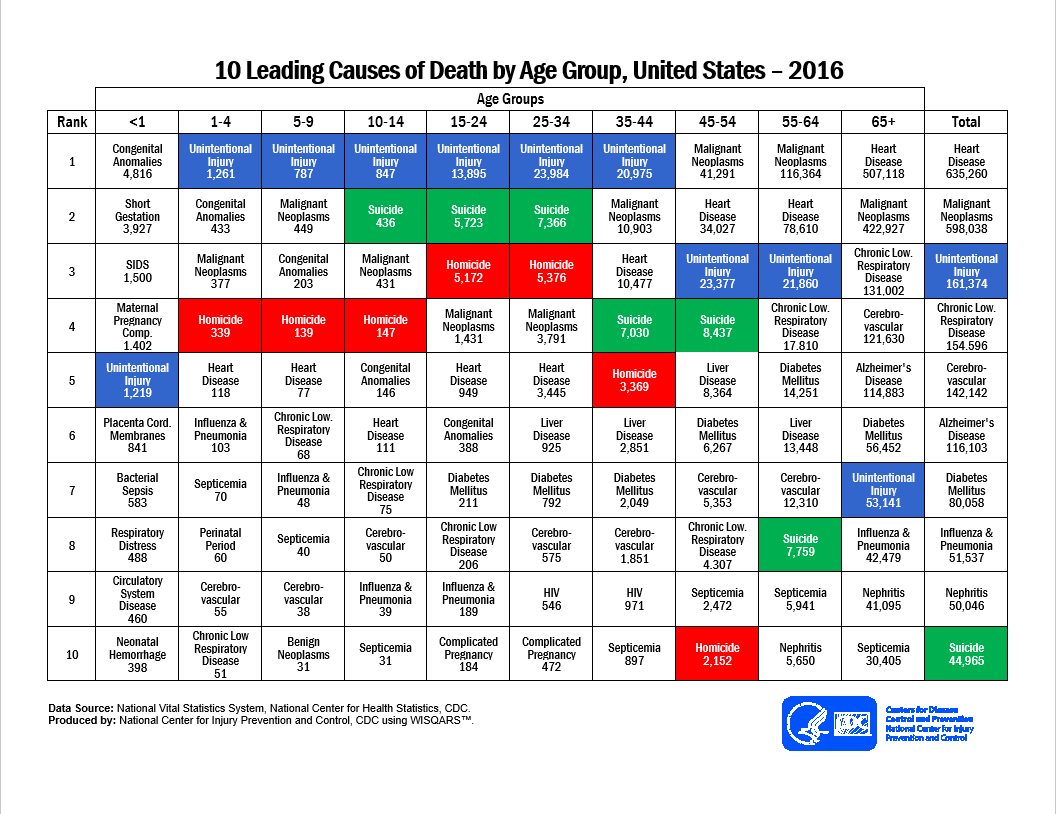
In 2016 nearly 45,000 suicides occurred in the United States among people age 10 and over—more than twice the number of deaths by homicide. It is now the nation’s 10th-leading cause of death.

Some studies suggest that people who belong to a faith community are less likely to die by suicide. A study published in JAMA Psychiatry in August 2016 found that women who attended religious services once a week or more experienced a suicide risk that was one-fifth that of women who never attended. But other studies report a more complicated interplay, finding that while “religiosity” generally protects against suicide, it can in certain situations have the opposite effect.
Some groups, like lesbian, gay, bisexual or “questioning” young people who take their faith seriously, are especially vulnerable. More than half of teen girls who identify as lesbian or bisexual report that they have seriously contemplated suicide.

In “Life After Suicide” (Am., 3/19), Associate Editor Ashley Mckinless reported on how one Catholic ministry in Chicago is assisting families in the aftermath of the loss of a loved one to suicide.
Infographic sources: National and state suicide rates from the Centers for Disease Control and Prevention; beliefs by religious group from the 2001-2016 Gallup Values and Beliefs Polls of U.S. adults (average over six-year period); national age-adjusted suicide rates from the World Health Organization and the O.E.C.D., which includes countries with advanced economies in the Americas, Europe and Asia; suicide rates by racial groups from the Suicide Prevention Resource Center, based on suicides per 100,000 residents.
This article appears in July 9 2018.


 Politics
 Faith
Faith Culture
 Vatican
 Scripture
 Podcasts