

The Thessalonians had very little time with Paul, Silvanus and Timothy before they were chased out of the city by a gang of “ruffians” as the NRSV translation has it in Acts 17:5. And yet, in that short time, they had “turned to God from idols, to serve a living and true God, and to wait for his Son from heaven, whom he raised from the dead – Jesus , who rescues us from the wrath that is coming” (1 Thess. 1: 9-10). Paul writes with great affection to the Thessalonians, presenting himself as both their spiritual mother and father in Chapter 2, a parent orphaned from his own children (2:7, 11-12, 17). Paul said that “we could bear it no longer” when he and his co-workers were separated from them, until Timothy came back bearing good news (3:1, 5, 6). And yet when Paul heard the news that cheered his heart and soul – that the Thessalonians had remained faithful in spite of persecution – other issues were left. It seems that the Church of Thessalonica was mainly Gentile (1:9) and so did not have the same background in the scriptures or Jewish theology as other Churches might have had. Perhaps they did not even have access to the Tanakh, the scriptures themselves. As Greeks, one of the more puzzling Jewish, and subsequently Christian, notions was that of the resurrection, that God will bring back to fullness the whole person, body, soul and spirit (as Paul uniquely describes the human person in 1 Thessalonians 5:23). Greek notions of the afterlife tended to an understanding that the body would be sloughed off, thankfully, and the soul would gain immortality. It must have been confusing for these just catechized Thessalonian Christians (and how much catechesis did they have?) to try to make sense of the resurrection. Does it happen when Jesus returns? What if people have already died (as some had after Paul left the city)? Are they resurrected? Or do they have to be alive when Jesus returns? It might seem odd to ask these questions, when resurrection speaks of the life which those who have died receive, but it is actually a powerful question, and one that certainly confused me when I was a child. It is a question asked by the Thessalonians which Paul answers in Chapter 4:13-18. Both the livng and the dead will be resurrected. Elsewhere in his letters Paul will explain that both those who are dead and those who are alive must be transformed prior to receiving the kingdom of God (1 Corinthians 15:35-54) – we cannot receive the kingdom of God without our bodies being “renewed.” That is, death is not essential to the resurrected body for those who are alive when Christ returns, but “transformation” is for everyone. On the other hand, this does not mean that those who have died are not now with God; they are, but simply in an “unresurrected” state, “away from the body” (Phil. 1:21-24; 2 Corinthians 5:1-10). When we come to Sunday’s second reading, then, Paul must also encourage them that although we do not know when Jesus will return, when the “end” will come, we must be prepared for it at all times. The means by which we prepare for the coming end is to live holy lives, to prepare for eternity by living as “children of the light and children of the day” (1 Thess. 5:5). Many people have wondered about the coming end, when it would occur, and what would be the signs, but the best advice regarding the coming end is that of Paul (similar to that of Jesus in the Gospels, such as Mark 13:32-37): prepare by living a life of love, faith and hope (5:8). Because whether or not Jesus will return in our lifetime, we will all be called to stand before him. Our earthly lives will end and what will matter is not how accurately we calculated the end, or our millennial prognostications, but whether we were able to love our neighbor as ourselves and love God with our whole heart. John W. Martens
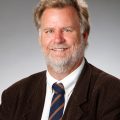
John W. Martens is an associate professor of theology at the University of St. Thomas, St. Paul, Minn,where he teaches early Christianity and Judaism. He also directs the Master of Arts in Theology program at the St. Paul Seminary School of Divinity. He was born in Vancouver, B.C. into a Mennonite family that had decided to confront modernity in an urban setting. His post-secondary education began at Tabor College, Hillsboro, Kansas, came to an abrupt stop, then started again at Vancouver Community College, where his interest in Judaism and Christianity in the earliest centuries emerged. He then studied at St. Michael's College, University of Toronto, and McMaster University, with stops at University of Haifa and University of Tubingen. His writing often explores the intersection of Jewish, Christian and Greco-Roman culture and belief, such as in "let the little children come to me: Children and Childhood in Early Christianity" (Washington, D.C.: The Catholic University of America Press, 2009), but he is not beyond jumping into the intersection of modernity and ancient religion, as in "The End of the World: The Apocalyptic Imagination in Film and Television" (Winnipeg: J. Gordon Shillingford Press, 2003). He blogs at www.biblejunkies.com and at www.americamagazine.org for "The Good Word." You can follow him on Twitter @biblejunkies, where he would be excited to welcome you to his random and obscure interests, which range from the Vancouver Canucks and Minnesota Timberwolves, to his dog, and 70s punk, pop and rock. When he can, he brings students to Greece, Turkey and Rome to explore the artifacts and landscape of the ancient world. He lives in St. Paul with his wife and has two sons. He is certain that the world will not end until the Vancouver Canucks have won the Stanley Cup, as evidence has emerged from the Revelation of John, 1 Enoch, 2 Baruch, and 4 Ezra which all point in this direction.
More by John W. Martens
 Politics
 Faith
Faith Culture
 Vatican
 Scripture
 Podcasts