

Paul writes in Philippians 4:6-9: “Brothers and sisters: Have no anxiety at all, but in everything, by prayer and petition, with thanksgiving, make your requests known to God. Then the peace of God that surpasses all understanding will guard your hearts and minds in Christ Jesus. Finally, brothers and sisters, whatever is true, whatever is honorable, whatever is just, whatever is pure, whatever is lovely, whatever is gracious, if there is any excellence and if there is anything worthy of praise, think about these things. Keep on doing what you have learned and received and heard and seen in me. Then the God of peace will be with you.” My parents spoke “plautdietsch” at home while I was growing up, the Low German dialect spoken by Russian Mennonites throughout the world. I could understand the language well enough, certainly well enough to understand when my parents, speaking to themselves (they thought), described me as a boy as “nervous” and “anxious” in “plautdietsch.” I am not saying they were wrong. I can still spend half of the night trying to fall asleep, worrying about the most mundane and insignificant things. Paul, in his beautiful letter to the Church at Philippi, encourages Christians at all times to rejoice, regardless of the situation, and in 4:6-9 asks them to throw their concerns upon God with “prayer and petition, with thanksgiving” (4:6). He encourages them to “have no anxiety at all” and to let the “peace of God that surpasses all understanding… guard your hearts and minds in Christ Jesus” (4:7). Easy for Paul to say, Apostle commissioned by the Risen Lord, whose rock-solid faith was able to allow him to endure imprisonment, beatings, humiliation, and the loss of all things…. But not so fast. In 2 Corinthians 11:28, Paul speaks of being “under daily pressure because of my anxiety for all the churches.” In 1 Thessalonians 3, Paul speaks twice of not being able to “bear” separation from the Thessalonians any longer (3:1,5). Paul, too, struggled with anxiety, especially for his Churches. Indeed, Michael Gorman has made the intriguing suggestion that the “thorn in the flesh” which Paul was given, about which he writes in 2 Corinthians 11:7-10, might be anxiety itself, and not a physical illness (Michael Gorman, Apostle of the Crucified Lord, Eerdmans, 2004). This is hard to prove, but it does point to the very real struggle Paul himself had with anxiety. And in many ways anxiety in a religious context is a lack of dependence on God or trust that God is on our side, that God is at work in us, that God cares for us. What is the solution to this anxiety? What is Paul’s own prescription? In addition to prayer, Paul says to focus on “whatever is true, whatever is honorable, whatever is just, whatever is pure, whatever is lovely, whatever is gracious, if there is any excellence and if there is anything worthy of praise, think about these things” (4:8). Finally, Paul does offer the Apostolic teaching and himself as a model of emulation. This does not to my mind indicate that anxiety will never again strike Paul, but that he does indeed have a prescription for how to deal with it when it does strike. It is sometimes easier to know the prescription, though, than to take it, for this last year has been the driest spiritual time I have encountered for many years. Anxiety tends to rise at these times. Things like prayer, focus on “whatever is true, whatever is honorable,” and the imitation of great spiritual warriors like Paul becomes harder to do. The peace that surpasses all understanding seems farther and farther away. It is at times, and now months, like this that I am glad that Paul gave to us his own struggles, his own humanity, because it seems more possible, more likely, at a strictly human level, to want to try, one more time, the prescription he left to us, since he needed to use it himself. John W. Martens
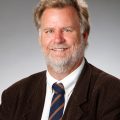
John W. Martens is an associate professor of theology at the University of St. Thomas, St. Paul, Minn,where he teaches early Christianity and Judaism. He also directs the Master of Arts in Theology program at the St. Paul Seminary School of Divinity. He was born in Vancouver, B.C. into a Mennonite family that had decided to confront modernity in an urban setting. His post-secondary education began at Tabor College, Hillsboro, Kansas, came to an abrupt stop, then started again at Vancouver Community College, where his interest in Judaism and Christianity in the earliest centuries emerged. He then studied at St. Michael's College, University of Toronto, and McMaster University, with stops at University of Haifa and University of Tubingen. His writing often explores the intersection of Jewish, Christian and Greco-Roman culture and belief, such as in "let the little children come to me: Children and Childhood in Early Christianity" (Washington, D.C.: The Catholic University of America Press, 2009), but he is not beyond jumping into the intersection of modernity and ancient religion, as in "The End of the World: The Apocalyptic Imagination in Film and Television" (Winnipeg: J. Gordon Shillingford Press, 2003). He blogs at www.biblejunkies.com and at www.americamagazine.org for "The Good Word." You can follow him on Twitter @biblejunkies, where he would be excited to welcome you to his random and obscure interests, which range from the Vancouver Canucks and Minnesota Timberwolves, to his dog, and 70s punk, pop and rock. When he can, he brings students to Greece, Turkey and Rome to explore the artifacts and landscape of the ancient world. He lives in St. Paul with his wife and has two sons. He is certain that the world will not end until the Vancouver Canucks have won the Stanley Cup, as evidence has emerged from the Revelation of John, 1 Enoch, 2 Baruch, and 4 Ezra which all point in this direction.
More by John W. Martens
 Politics
 Faith
Faith Culture
 Vatican
 Scripture
 Podcasts