


There is something unique about “Saturday Night Live.” It could be attributed to its revolving door of talented performers, its characters that have endured for decades or maybe its variety show format, which feels like the last pillar of a bygone era of entertainment. But many would argue that the factor that keeps “SNL” on the air year after year, loudly and boldly proclaiming, “Live from New York, it’s Saturday night” each weekend, is the show’s creator and longtime producer, Lorne Michaels.
Michaels is well known to fans of the show, yet seemingly not much is known about him. He has been running one of the most popular and longest enduring comedy shows of all time, but he rarely cracks a joke on screen and seems to be an enigma even to the cast and crew that work for him. That makes the new documentary “Lorne,” all the more exciting—maybe it will finally shed some light on the man behind the curtain.
Right at the start, the film confronts this paradox. The narrator jokingly reveals that Michaels allowed the crew to document his life but still did his best to avoid the cameras as much as possible. Almost immediately, it becomes clear that despite the intimate title of the film, it still would not be able to get to the heart of Lorne Michaels—at least not directly.
The film approaches Michaels through his work on “SNL.” It shows a week through Michaels’s eyes while the show is in production, while also taking time to jump back to look at his past experiences in entertainment. But while the movie does dabble in his personal life, it rarely goes past offhandedly mentioning the fact that he is close friends with a random celebrity or that he is a family man.
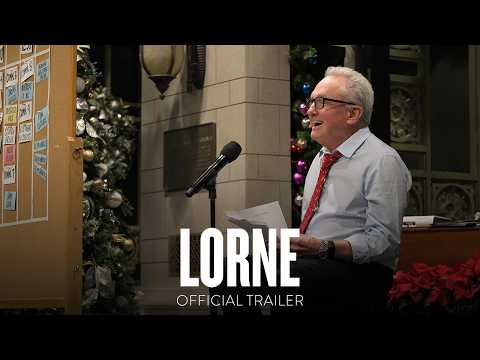
The show celebrated its 50th anniversary last year, and with that came a multitude of documentaries about the show as well as some of its most famous cast members and frequent guests, including Steve Martin, Chevy Chase and Eddie Murphy. This documentary feels like a continuation and perhaps culmination of that milestone. Legendary comedians and performers like Paul Simon, John Mulaney and Tina Fey all give their personal perspectives on Michaels and make up the bulk of the film’s narrative voice.
For a film that is about Lorne Michaels, it is interesting that many of the stories and personal anecdotes are not provided by him. Impressions from “SNL” cast members past and present, as well as colleagues and friends, fill in the holes. The film looks at the history of the show as much—if not more—than it does at Michaels himself. New animated segments from the SNL’s “TV Funhouse” crew help round out the film, featuring Michaels in a hyperbolic and caricatured manner living lavishly in his Manhattan apartment. Of course, many friends and colleagues are featured along with cast members from “SNL.” They playfully tell stories about their interactions with Michaels as well as some of his idiosyncrasies they have picked up on over the years.
When I watched the film, I half expected the jokes and characteristics described to be linked to some moment from Michaels’s past, but the film never really goes in that direction. Instead, the film unpacks his devotion to his work in comedy and the fact that the “SNL” production process and format is, in some ways, a reflection of Michaels himself.
The show, like Michaels, is quirky. No one else creates a show like “SNL” because no other show has Lorne Michaels. Moments like the writers, cast and host sitting on the floor of Michaels’s office to pitch sketches or going to a group dinner every Tuesday night don’t happen on other comedy shows because they have no Michaels. Through these rituals, you are shown that he does not make many changes to the show; in some ways it is the same as it was 51 years ago. Michaels and the show are symbiotic; one is incomplete without the other.
The documentary is at its best when it takes a moment to highlight the man himself, giving the audience glimpses into his past and struggles, humanizing him for those who see him as the man pulling the strings from behind the curtain. Moments like his leaving “SNL” in 1980 because he felt like the show didn’t need him anymore, his struggles with his father’s death and a pseudo-spiritual road trip with Paul Simon show that Michaels is more than just the sum of “SNL’s” parts.
The film culminates in a soft moment that shows Michaels at his most vulnerable. Walking through his home in Maine, he gets tender with the camera for a moment and discusses that despite his aversion to change, it is inevitable. He talks about the responsibility he feels for “SNL” and worries that when he leaves the show will be forced to end. A throughline of the documentary is NBC executives almost cancelling the show and Michaels pulling through to save it. Behind his persona and the comedy he produces, he is a father who cares deeply for the thing he created.
Despite Michaels’s aversion to change, “SNL” continues to evolve. Its writing staff and cast members now come from diverse perspectives and backgrounds. It does its best to stay topical; it provides a launch pad for the world’s biggest comedians year after year; it brings on new stars and old, introducing and reintroducing the world to artists, athletes, politicians and comedians like nothing else. Each week, sketches are written the same way they were 50 years ago (albeit with less cocaine). Although “Saturday Night Dead” is an often-used headline when the show has an off week, the show continues to thrive and expand into new territories. And Lorne Michaels continues to steer the ship through new territory. In its 51st year, Michaels has just launched a well-reviewed British spinoff of “SNL” that he sees as the “cooler,” “smarter” cousin of the U.S. show.
Year after year, aspiring young people are inspired by Michaels and the show he’s worked so hard to create. It’s hard to calculate how many shows, movies and comedy specials are a direct result of what Michaels has built at NBC.
So will Michaels retire, will the show end, will he change his rituals to adapt? The answer seems to be not any time soon, at least as long as Lorne has something to say about it.


 Politics
 Faith
Faith Culture
 Vatican
 Scripture
 Podcasts