


On an early Saturday morning in June, about 200 people streamed into the Sister Jean Ballroom at Loyola University Chicago. Volunteers in green T-shirts ushered everyone to registration tables to pick up schedules, simultaneous translation devices and yellow T-shirts emblazoned with “Holy Resistance/Resistencia Sagrada”—the theme for the 2026 Congress for Spiritual and Public Leadership.
Sounds of the choir rehearsing merged with laughter and conversations in English and Spanish. High school and college students, retirees, families with young children, domestic workers, lawyers, activists, educators, laypeople, sisters, priests—all were here for a day of relationship building and learning about liberation theology and community organizing.
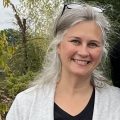
In a small room across the hall, three people in yellow T-shirts stood in a circle, hands clasped and heads bowed. Joanna Arellano-Gonzalez, director of training and formation for the Coalition for Spiritual and Public Leadership, the organization convening the congress, offered an unhurried, heartfelt prayer for the day.
Then Ms. Arellano-Gonzalez headed to the ballroom, where she said some hellos, moved some chairs, offered hugs, answered questions and nearly disappeared into the background of the event. She was happy to be just one yellow T-shirt in a sea of them—a community of Black, brown and white members rooted in faith and united in their mission to build racial, economic, social and environmental justice through direct action.
The opening session featured a five-minute video recapping highlights of the past year. It focused on how the coalition engaged with Operation Midway Blitz, ICE’s aggressive enforcement action that began last September in Chicago. The C.S.P.L. responded with Masses and eucharistic processions and lawsuits. As the lead plaintiff in a series of cases against the departments of Justice and Homeland Security, the Trump administration, and others, the C.S.P.L. and their collaborators won the right to enter the Broadview Detention Center first to provide Communion and ashes on Ash Wednesday, then daily during Holy Week to provide Communion and celebrate the ceremony of the foot washing. Finally, on May 15, they reached an agreement with the federal government to offer pastoral services daily to those inside the facility.
The C.S.P.L.’s campaign for pastoral care for immigrant detainees made national headlines. And while the legal cases were a key part of the strategy, it was the footage of thousands of people peacefully processing, praying and celebrating the Eucharist outside Broadview that made compelling video. It was clear that this was not just a few activist lawyers at work. This was a community effort.
Arturo González (no relation to Arellano-Gonzalez) first got involved with the C.S.P.L. in 2018, a year after the organization was created. With a background in community organizing, Mr. González noticed a certain quality of the group. “I was attracted to how they engage people of different backgrounds,” he said. “Building a coalition requires getting people to the table under the same mission. C.S.P.L. has been able to work that out very well.”
Their Ash Wednesday event at Broadview in 2026 was scheduled right after chaotic, violent demonstrations against ICE took place, so tensions were especially high. And yet 3,500 people showed up, including Cardinal Blase Cupich of Chicago. “Just think of the amount of logistics that required,” said Mr. González, who became the C.S.P.L. board president in July. As a veteran event organizer himself, Mr. González can spot people who are running an event, even if they never take the stage or hold the mike.
“I would see Joanna talking to different people—she was behind the scenes, making sure everything is working properly,” he said. “I could see her coordinating and guiding people and answering questions.”
Ms. Arellano-Gonzalez has been C.S.P.L.’s director of training and formation since 2021, and she describes it as her dream job. “It’s something powerful to experience when you’ve been with church leaders and community members for so long and you start really seeing the fruits of solidarity deepen more and more every year,” she said. Her journey into the work has not been a straight line, but for those who know her, it’s no surprise that she has ended up where she is.
Early days
Born in Chicago to parents from Durango, Mexico, Ms. Arellano-Gonzalez was raised with her twin sister and two older sisters in the city’s Little Village neighborhood, a Mexican enclave. They belonged to St. Agnes of Bohemia Parish, which she describes as a hub of social action in Little Village.
“I loved it,” she said. “Some of the most incredible priests came out of St. Agnes—Bishop John Manz, Father Clete Kiley, Bishop Mark Bartosic…. I mean, the list goes on. We were lucky—I grew up listening to them and just being immersed in parish life.”
Her force-of-faith mom, Armida Arellano, introduced her daughters to the Divine Mercy chaplet and the rosary. During her summer breaks, Joanna would accompany her to clean the church every Monday.

Ms. Arellano-Gonzalez remembers being an artistic, pious, introverted kid. Her mom was a Chicago Public Schools lunch lady for 25 years, involved in the union, UNITE HERE Local 1. “She would take us to her union protests and marches,” Ms. Arellano-Gonzalez said. But Joanna was so shy that she didn’t want to participate in the chanting. Still, she said, her mom taught her about women’s dignity, the importance of education and the need to heal divisions between the Black and brown community. “I always saw her putting herself out there and being very vocal,” she said.
After she graduated from the University of Illinois Urbana-Champaign, a neighbor encouraged her to apply for an internship at the Archdiocese of Chicago’s Office for Peace and Justice. “I just remember I had never even heard of an office for peace and justice. It sounded like a dream come true,” she said. Ms. Arellano-Gonzalez was hired and quickly promoted from intern to program assistant.
The job wasn’t all that she had hoped it would be, even though she learned a lot. In a period of deficit-induced restructuring, Ms. Arellano-Gonzalez was promoted to archdiocesan director for Catholic Relief Services and the Catholic Campaign for Human Development. “I just felt like I was being thrown into an ocean,” she said, and vowed to make the best of it.
A weeklong community organizing training in 2015 was a game changer. There she learned the art of conducting one-on-ones, the fundamental skill for building intentional relationships in organizing. “It completely changed my life,” Ms. Arellano-Gonzalez said. “I left that week and went on to do hundreds of one-on-ones with people all over the diocese.”
Building C.S.P.L.
Around this time, she started thinking about what it would look like to have community organizing trainings that aligned with Catholic parish culture. It would be different from the agitational organizing style that’s popular in other contexts but feels aggressive in a church environment.
Together with six other eventual co-founders of the C.S.P.L., Ms. Arellano-Gonzalez began imagining a way to talk about organizing, spirituality and liberation theology all together, and to “tap into this mystical dimension that we have in our church to really create something remarkable.”
Also around this time, she began feeling like it was time for her to leave her position at the archdiocese. She resigned from her post in 2016 and took a job in the labor movement a few months later while continuing to help build the C.S.P.L. They incorporated as a non-profit in 2017.

She was nominated to be the organization’s training board chair, but she was so shy she couldn’t imagine taking the job. As she was deciding against it, Ms. Arellano-Gonzalez said her colleague Gabriel Lara said something to her that made her reconsider: “You complain so much about Catholic women not being at the center of our church, but you’re a Catholic woman, and this means you too.” Those words encouraged her to accept the nomination and to step into a role that felt simultaneously uncomfortable and exhilarating.
“From the very beginning, we were asking, how do we equip parishioners to deepen their spiritual lives while also acting for justice, and how do we form them with a different type of theology that they may not be getting at their parishes but that can inform their public lives to be bold and courageous?” she said.
It was not an easy process.
The first C.S.P.L. training drew just 12 people. “We were just like, ‘Is this worth it?’ We did so much work for this!” They continued to plug along, reaching out to people at parishes in Chicago and the western suburbs. Sometimes turnout at meetings was in the single digits. People would ask why they focused so much on relationship building.
“Relationship building is a discipline,” Ms. Arellano-Gonzalez said. “You have to commit to continuously just inviting people into the work and then also just continuing to build trust. And that takes time. There are just no shortcuts to it.”
Opportunity comes knocking
The C.S.P.L. continued to grow, and in 2021 a fellow board member, Fran Glowinski, a Franciscan sister, approached Ms. Arellano-Gonzalez on behalf of the board to ask if she would consider taking a new staff position, director of training and formation. Ms. Arellano-Gonzalez took a pause from her board role to discern this new opportunity. She prayed and reflected on her journey, especially how far she had come from letting shyness hold her back. She ultimately accepted the position.
“It was such a great gift,” she said. “The thing that you’re most scared of is something that you really have to lean into and where you can really find your gifts too. I wish I could tell anyone who has a fear of being seen or speaking publicly, ‘If I could do it, you absolutely can.’”
As she leaned into her newfound voice, more opportunities emerged for her to raise it. She enrolled in Fordham University’s master’s degree program in Christian spirituality, where she concentrated in spiritual direction. When she was invited to contribute to the website Catholic Women Preach, she didn’t feel she had anything to say. But she sat with the Scriptures anyway and realized that she did.
Daryl Grigsby, a Black Catholic writer based in California, saw one of her homilies in 2023. He was so impressed with her message and authenticity that he emailed her to let her know, and, in the spirit of one-on-ones, she responded, asking to hear more about his work. Since then, they have regular monthly conversations.
“Every time I talk to Joanna, either about the work C.S.P.L. is doing or about her own spiritual journey or about issues she’s concerned about or experiences she’s had in Chicago, it’s always been inspiring,” he said. “My life is definitely richer because I know her.”
Helping others raise their voices
Ms. Arellano-Gonzalez says every day at her job is different. She meets with members and trainers, crafts the group’s messaging, conducts one-on-ones, prepares upcoming trainings. Part of the training they’ve done with members is around the historical Jesus: “The Jesus that walked the earth, not the Jesus that I think has been constructed from a lot of things out of context. Giving people the space to encounter a different Jesus than they’ve been formed in is absolutely transformational.”
When she was in the labor movement, she worked as a storytelling coach for domestic workers, factory workers and temp workers, helping them prepare their personal stories to share with the media. Ms. Arellano-Gonzalez continues to do some of that work because she enjoys it so much. Before the congress, she met with Irma Hernandez, a leader in the pastoral care campaign and a C.S.P.L. member from Mount Carmel Parish in Melrose Park, Ill., to help her prepare a reflection for the closing Mass.
Ms. Hernandez was involved in immigration reform efforts for two decades before she encountered C.S.P.L. At that point she felt discouraged at the prospect of change, but she attended a C.S.P.L. event anyway.
“My whole being wanted to resist,” she said in Spanish through a translator. “I kept saying to God, ‘I gave 20 years, and I don’t see enough change.’” But over and over, she heard the same words: I need you. “Finally I said to God, ‘OK Lord, I’ll do whatever you want. Let the Holy Spirit guide me and give me strength.’ That moment changed my mindset.” In engaging with C.S.P.L., she said, “I discovered a different way to organize. We prayed and we prayed, and that moved me deeply.”

Ms. Hernandez remembers especially the People’s Mass outside Broadview on Nov. 1, 2025. “We prayed again and again and kept organizing. We planned every detail and invited many people to join us. Now, our detained immigrants at Broadview can visit us every day, and that feels wonderful. Together, grounded by God, we helped make this possible.”
Ms. Hernandez’s message contained both a gravity and a levity that resonated with her fellow congress-goers. “Sometimes I think, what if I had said no? What if I had kept to myself?” she said. “Maybe my house would have been cleaner. But I wouldn’t have been part of this grand project of God. And thanks to that, yes, I am part of this story—something extraordinary and beautiful.”
Ms. Arellano-Gonzalez sees the C.S.P.L.’s campaign for pastoral care for immigrant detainees as an example of the fruit that can come from playing the organizing long game. When news broke about the campaign’s success, calls from other dioceses and parishes flooded in, asking how they could do something similar. “I just said, ‘It’s eight years of base building.’ That’s really what it is.”
She sees their actions around Broadview as an example of the power of narrative work too. “We’ve been really clear what the narrative is: It’s about human dignity, and that the church will always stand with the poor and oppressed. It’s really just the Gospel mandate,” she said. “The more we’re grounded in contemplation and prayer with ourselves and with one another, the more I think we’re able to access this vision from God that just makes any justice work stronger.”

 Politics
 Faith
Faith Culture
 Vatican
 Scripture
 Podcasts