


Like many in my generation, I first met the late Sam Neill as Dr. Alan Grant, the gruff paleontologist hero of “Jurassic Park” (1993). In that film, the irascible Grant shepherds two children through the dinosaur-prowled park, rediscovering his own heart in the process. That performance cemented Neill in the popular imagination as a father figure: rough-edged and emotionally inarticulate on the surface, but caring and protective underneath. Maybe this disregards Neill’s versatility as an actor, which made him equally convincing as romantic leads and as psychopaths, but for many “grumpy yet loving dad” is the image that stuck.
Neill played variations of this archetype many times in the latter part of his career, and one of the best was in Taika Waititi’s “Hunt for the Wilderpeople” (2016). Based on the novel Wild Pork and Watercress by Barry Crump, it’s a quirky, heartwarming story of a foster child and parent on the run from the authorities in the New Zealand wilderness. The film’s offbeat style should clash with its serious subject matter, but the movie works because you believe in the relationship between boy and surrogate father—thanks, in large part, to Neill.
Ricky Baker (Julian Dennison, in a breakout role) is a troubled kid with a history of misdemeanors and failed foster homes. But when he ends up with the Faulkners—Bella (Rima Te Wiata) and Hector (Neill)—he finally finds a true family. Hector is cantankerous and uncommunicative, but Bella is warm, supportive and capable of pulling out Ricky’s best qualities. But when Bella dies of a stroke, leaving Ricky solely in Hector’s inexpert care, the state intends to take him back into custody. Because of his rocky history, the next stop for Ricky is juvenile detention.
To preserve his freedom, Ricky runs away into the bush, New Zealand’s vast, mountainous hinterland. Hector finds him immediately, but circumstances force them to go on the run together, pursued by a relentless child welfare worker (Rachel House). Along the way, the mismatched pair develop a powerful bond as they confront nature, human absurdity and their own emotional wounds.
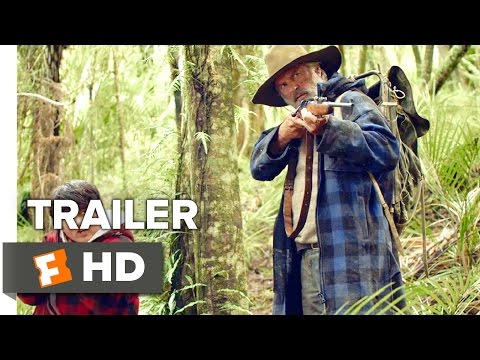
The best of Waititi’s films balance the grim realities of life with irreverent, almost cartoonish comedy. It’s a tricky balance, and it doesn’t always work (it fell flat for me in his 2019 film, “Jojo Rabbit”); but when it does there is nothing more bizarre or delightful. In “Hunt for the Wilderpeople,” for instance, Bella’s death is tragic, as it should be. Before things can get too maudlin, however, Waititi himself shows up as the minister presiding at her funeral, infuriating Hector with the laborious images in his homily (“You know, sometimes in life it seems like there’s no way out. Like a sheep trapped in a maze designed by wolves”). At the same time, the film never spirals so far into zaniness that you forget about the real hardships Ricky has faced. Here, Waititi relies on the strength of his actors, whose performances are calibrated with the movie’s gonzo energy. Ricky makes us laugh, but there’s genuine sadness in Dennison’s performance, an emotional reality that grounds the film’s antics.
And none of this would work without Neill. One of the film’s most moving threads is the slow softening of Hector’s stony heart. He admits, early on, that he was never interested in having children; that was Bella’s dream, and he agreed because he loved her. Like Ricky, he’s been wounded by life and is reluctant to open up. They each have something to learn from the other. Ricky wouldn’t make it out of the bush alive without Hector’s knowledge. But Hector needs Ricky to remind him that relationships are just as necessary for survival as building a fire or identifying plants.
Neill had a rare gift for portraying that sort of transformation. Neither Hector nor “Jurassic Park”’s Grant are very forthcoming about their backstories. But a look from Neill—a mournful gaze, a vague smile—could tell a story in itself, conveying the history and humanity of his characters more powerfully than words. His grouches had powerful hearts. Sometimes those hearts were buried deep beneath layers of sarcasm and scowls, but Neill never let you forget they were there.
Acting is artifice, of course, but maybe the reason Neill could fill his characters with such soulfulness was that he possessed it. You could see it in his viral posts about life on his farm in New Zealand, the warmth and humor with which he cared for his animals. And you find it in the tributes friends posted after his passing. “It was a stretch for him to play a character who acted as though children were messy and smelly because this was the opposite of the loving father he was to his children,” Steven Spielberg told Variety. Others, especially younger co-stars, described him as a mentor and guide. Dennison shared photos of himself and Neill from the set of “Hunt for the Wilderpeople” on Instagram this week, writing: “I was young when we shot wilderpeople. But I still hold onto a lifetime of memories. Sam showed me what it was like to live a life of service to the things and people he loved.”
Some leave behind a legacy of artistic achievement. Others, a legacy of love and service. Sam Neill gave us both.
“Hunt for the Wilderpeople” is streaming on Amazon Prime.


 Politics
 Faith
Faith Culture
 Vatican
 Scripture
 Podcasts