Among the locales of Southern California that I saw for the first time on a recent visit was a Catholic church with a curious history: Christ Cathedral in Garden Grove, Calif., the seat of the Diocese of Orange.
The reflective-glass building was born in 1981 as the “Crystal Cathedral,” the 2,000-seats-plus home of famous Protestant evangelist Robert H. Schuller’s ministries and the locale of the weekly “Hour of Power,” once the most-watched religious television program in the country. After it was purchased by the Diocese of Orange in 2011 and renovated, it reopened in 2019.
Externally, it does not look significantly altered from its previous incarnation, but the interior has obviously been substantially refitted to meet the needs of Catholic worship. Nonetheless, one gets a distinct sense of difference from other Catholic churches inside, especially if one’s usual church haunts are more or less imitations of medieval European cathedrals. Like the Cathedral of Our Lady of the Angels 30 miles north on the 5 Freeway in Los Angeles, it makes for a unique liturgical environment.
The projects were also two of the largest church construction projects in the United States in many decades. In the case of Los Angeles, more than 40 architectural firms submitted bids for the project, which was completed in 2002. One of the five finalists was a man who died just a month ago, Frank O. Gehry. The idiosyncratic architect (who lost out to Spain’s Rafael Moneo) told the Los Angeles Times in 1996 of the unique challenge a cathedral presented: “A cathedral should have a purity of purpose, but that’s the hardest thing to achieve in architecture.”
It remained a career goal for Gehry, though he had been born Jewish and had been an atheist since an early age. In 1996, he was once again a finalist in the competition to design Rome’s Jubilee Church, a commission that eventually went to Richard Meier, who also designed Los Angeles’s Getty Center.
Gehry told the Los Angeles Times in 2019:
I would like to design a church or a synagogue. A place that has transcendence. I’ve always been interested in space that transcends to something—to joy, pleasure, understanding, discourse, whatever a space can do to be part of the dialogue. Forget the religion aspect. How do you make a space feel transcendent? How do you create a sense of ease with the universe, the rain, the stars and the people around you? It’s comforting to sit in a big room and listen to the rain.
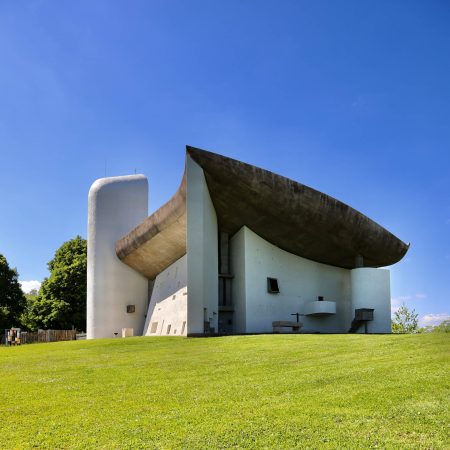
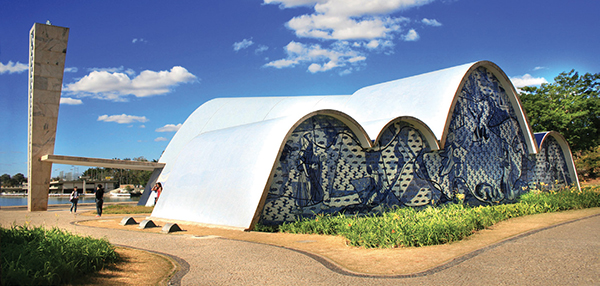
If that “forget the religion aspect” is a little shocking, remember that Gehry wouldn’t have been the first atheist to build a famous church. Despite having little interest in Christianity, the Swiss-French architect and urban planner Charles-Édouard Jeanneret, better known as Le Corbusier, designed a Dominican priory in France as well as the famous “Pilgrim’s Chapel” in Ronchamp (note its vague resemblance to the Czech Republic’s new “3-D Church”). One of his famous proteges and a fellow atheist, Brazil’s Oscar Niemeyer, designed the French Communist Party headquarters in France but also built a Roman Catholic cathedral in Brasília as well as a famous postmodern parish church, the Church of St. Francis of Assisi in Pampulha, Brazil.
Because not everyone is a fan of the new cathedral in Los Angeles (not everyone is a fan of Christ Cathedral either), it is tempting to wonder what Gehry would have done differently with either space. Bishop Robert Barron was diplomatic in a 2019 article, not criticizing the existing Los Angeles cathedral (which I rather like), but noting Gehry’s possible selection for the project and writing: “Once the great architect realizes that the deepest desire of his heart is for the living God, I would love to see the church he would build.”
America’s editor in chief Drew Christiansen, S.J., was less of a fan of Gehry back when the latter’s fame soared in the 1990s and 2000s. “The most celebrated architects of the day seem like spoiled children,” he wrote in a 2006 column. “Frank Gehry’s work appears monumentally self-indulgent. For me, it works neither as art nor as architecture.” But another editor, David Toolan, S.J., called Gehry’s designs “an antidote to despair, a sign of hoре” in 2001.
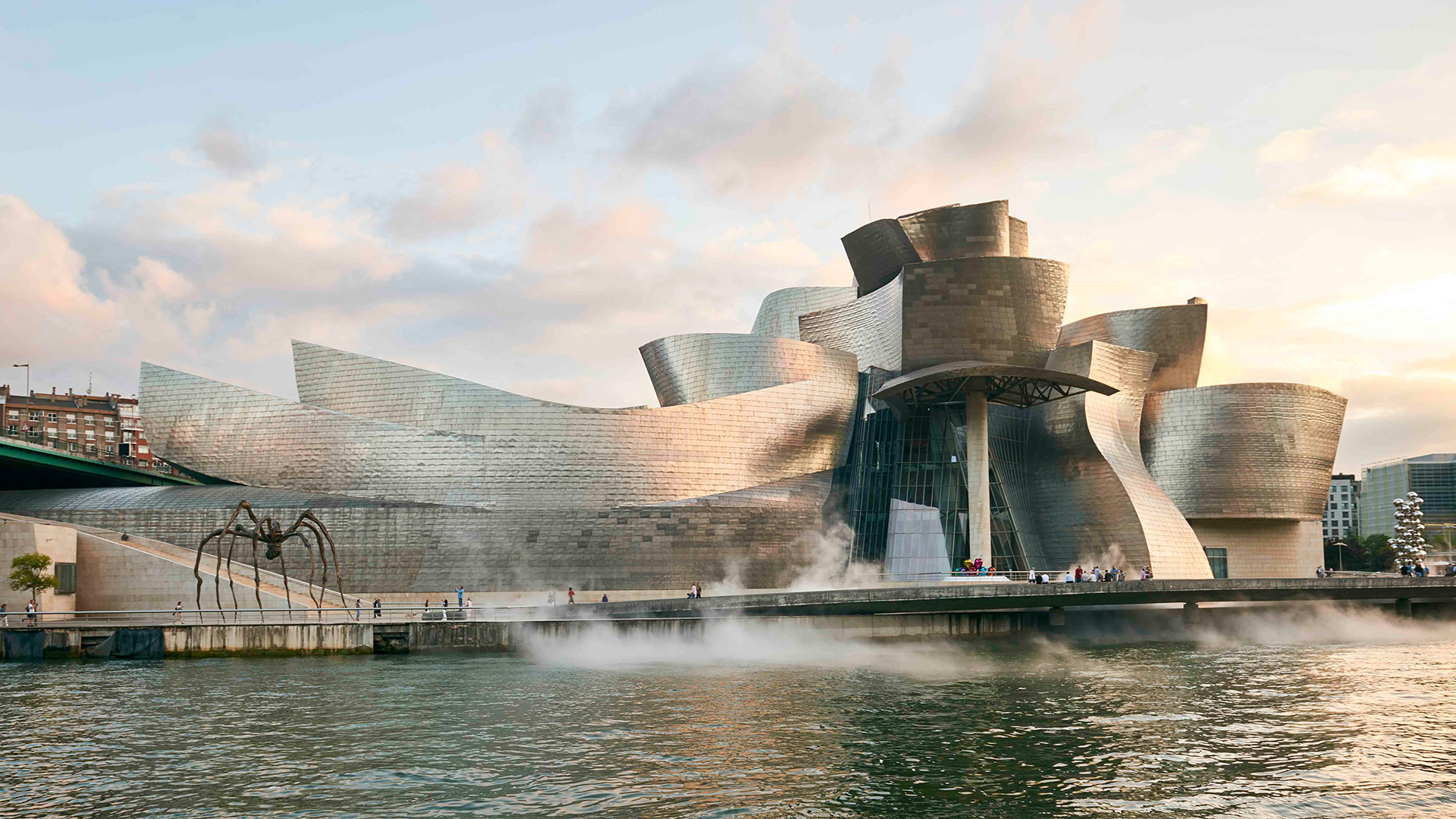
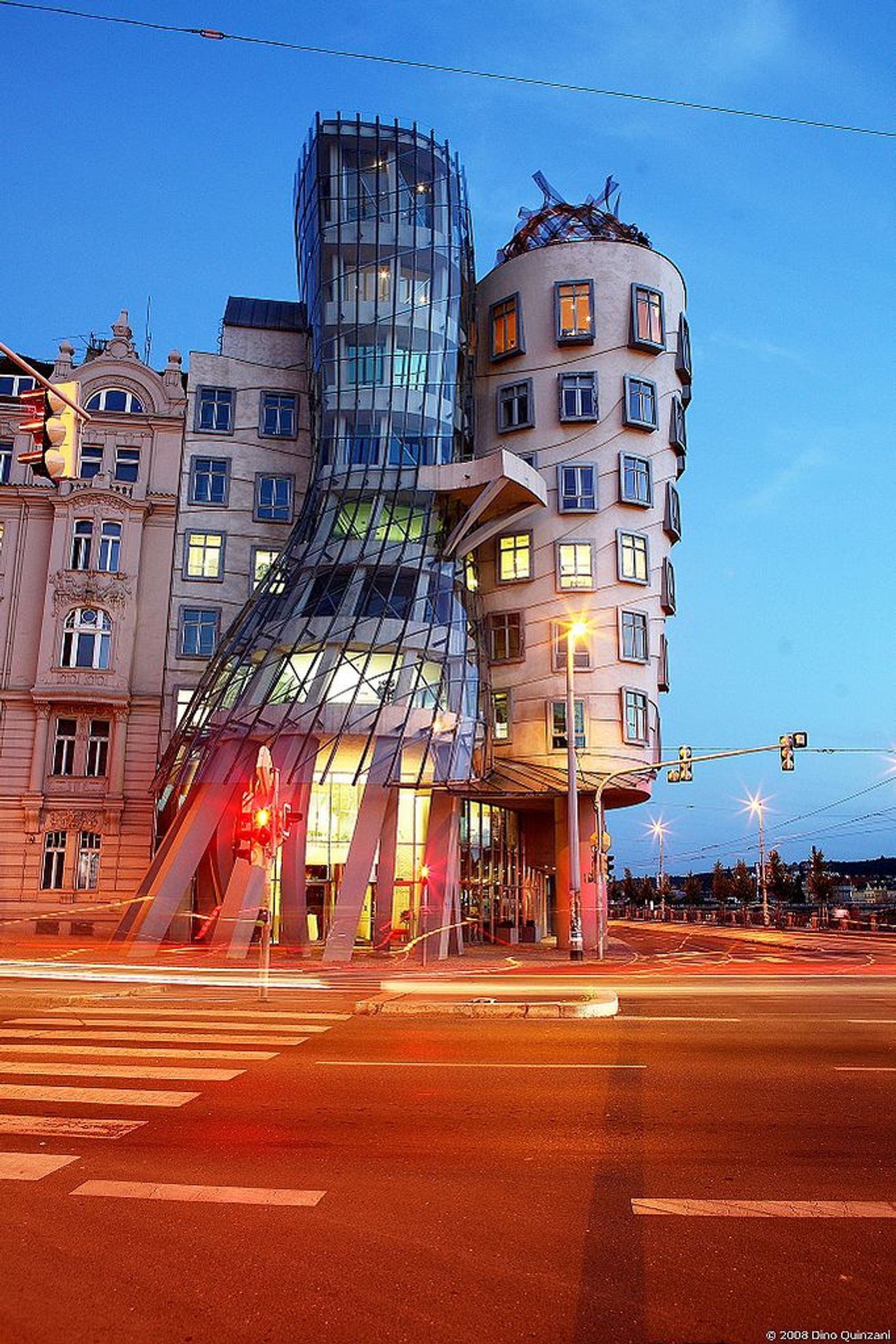
So what would a Gehry cathedral actually look like? Would we have gotten something like Walt Disney Concert Hall in Los Angeles or the Guggenheim Museum in Bilbao or the Dancing House in Prague (or, if you’re a journalist of a certain age, the former Condé Nast cafeteria in New York City), where no line is straight, where every material feels unconventional and where whimsy seems a defining element?
Well, we have some idea. Frank Gehry did design a church: The Chapel of the Advocate at Loyola Law School in Los Angeles.
A curious bit of Los Angeles history is important here. In 1978, Loyola Law School (part of Loyola Marymount University, but with its own campus in downtown Los Angeles), hired a relatively unknown Gehry to design a new campus for the school. He took two existing buildings on the campus and integrated them over the next decade into a postmodern village that simultaneously looks like no school ever built but also harkens back to the Roman Forum and other classical motifs in its own irregular, deconstructed way.
The Chapel of the Advocate, finished in 1982, is similarly both classic Gehry and still beholden to tradition. Yes, there is a bell tower, but it is made of wood and glass, and has no bell. One does not enter through a portico, but by descending a flight of stairs, like entering a shrine in the Holy Land. There is an abundance of wood (on a campus full of steel and concrete), giving the impression of a Swiss chalet until one sits and realizes the dominant light source is a stained-glass window installed at an angle in the ceiling itself.
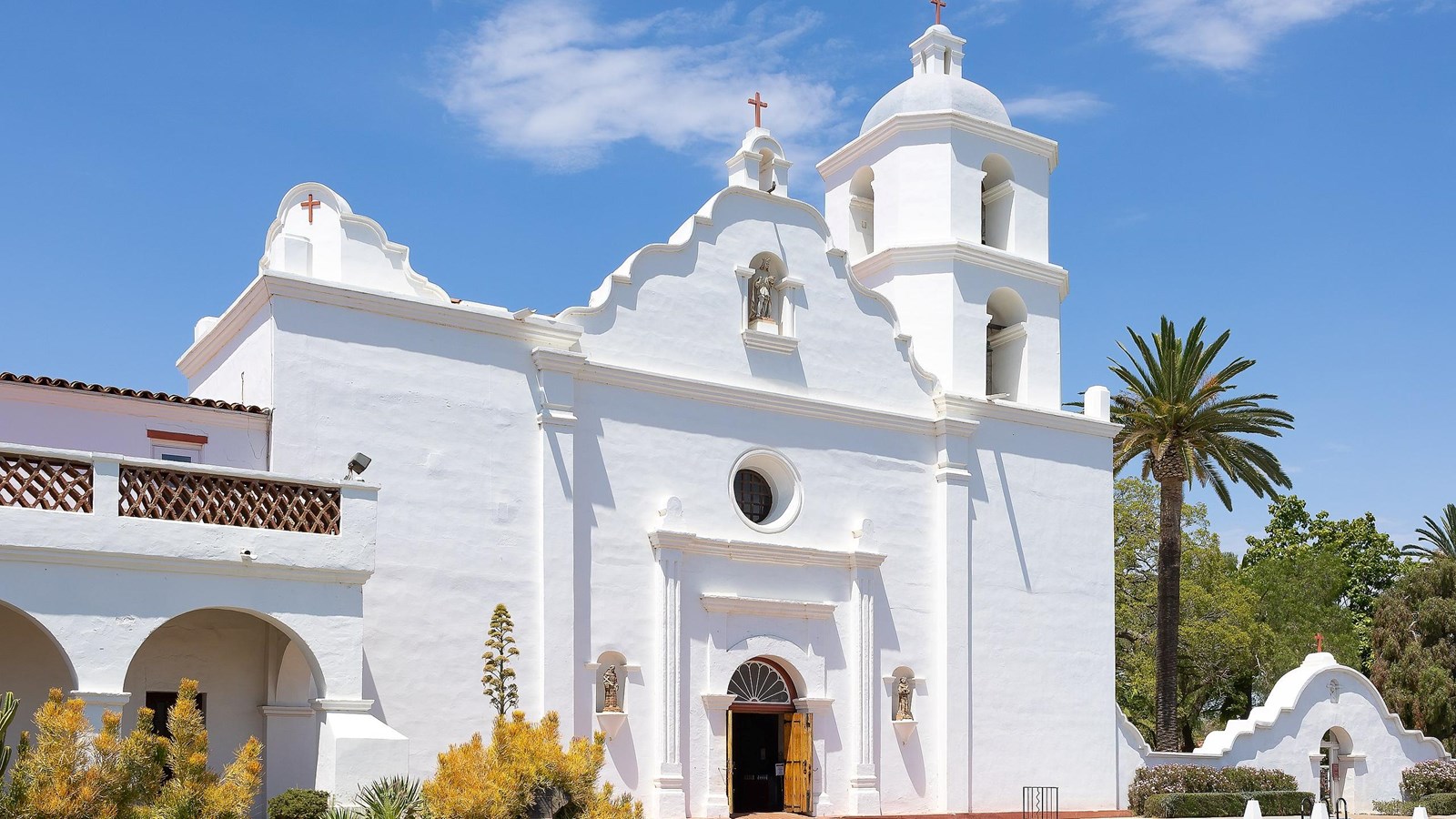
It is, frankly, a thousand times more conducive to transcendence and worship than many of the choices one encounters often enough in church architecture, those being a tastefully appointed dentist’s office or (worse) a dark and hulking neo-Gothic cave. Note also that Gehry didn’t go with the obvious, the Mission Style that does have ancient roots in the church in California. Rather, his contribution was unique and particular to his postmodern age, and yet still connected to larger and longer church traditions. Isn’t that what good church architecture should be?
Here are some words of wisdom on the subject from America’s editors in 1954 (almost a decade before “Sacrosanctum Concilium”) commenting on a conference on church architecture:
The greatest tribute we could pay to the ancient Gothic architects would be to refuse, as they refused, to be bound by a too-literal convention, so that Christian culture can give free scope at all times to its own rich creative powers.
There’s a Southern California sentiment: “free scope at all times to its own rich creative powers.” Would a Gehry cathedral have met such an ambition while also being distinctively Catholic and part of the living church? Would it have been a twin of Disney Hall? Would it look like a huge version of The Chapel of the Advocate? Or would the architect have struck out in a different direction, given the specific needs of a Catholic cathedral?
Looking at Frank Gehry’s other contributions to our built environment around the world, I think we can be sure it would be a place of imagination, of openness to the divine, and of the transcendence he was so open about seeking.
•••
Our poetry selection for this week is “Chosen,” by Hayley Simon. Readers can view all of America’s published poems here.
Other recent Catholic Book Club columns:
- ‘Gaudium et Spes’ and the optimistic final days of Vatican II
- George Orwell is more relevant than ever. Just ask the pope.
- Michael Harrington, the ‘pious apostate’ who championed socialism in America
- Phyllis Trible, who challenged our image of God as male or female
- The patron saint of undergraduate philosophers: Frederick Copleston
Happy reading!
James T. Keane


 Politics
 Faith
Faith Culture
 Vatican
 Scripture
 Podcasts