For the Third Sunday in Advent, I reflected on the joy inherent in the Christmas promises, as we look to the past, present and future. Then some two days later I was felled by a bacterial infection that kept me in bed for the next five days, unable to do much beyond sleep, take my antibiotics and drink a little ginger ale. I was not able to reflect much on the readings for today or to think about much at all. There are so many sorts of healing needed by all of us, physical, spiritual, mental and emotional, but all of our weaknesses make us vulnerable. To put it bluntly, I hate being physically sick. I hate feeling weak and alone and, frankly, useless. All I did was lay there for five days when I could have been grading, or decorating, or buying Christmas presents or…something!
What an incredible choice God made to come into the world as an infant. Vulnerable, weak, helpless, dependent: what precisely can a baby do? God chose to share our humanity from the beginning, sanctifying every age as (I believe) Irenaeus said, and joining us in solidarity. Thanks be to the God who came to us as we are, who knows us in our strength and our weakness, who loves us for who we are and not for what we can do. As it is, the greatest gift is love, and that is available to all, regardless of their station, age or ability in life, to give and to receive, and it is the gift that God gave to us in the person of his son, born as a vulnerable child. May your Christmas be filled with the love of God and that of your family and friends.
John W. Martens
Related
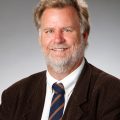
John W. Martens is an associate professor of theology at the University of St. Thomas, St. Paul, Minn,where he teaches early Christianity and Judaism. He also directs the Master of Arts in Theology program at the St. Paul Seminary School of Divinity. He was born in Vancouver, B.C. into a Mennonite family that had decided to confront modernity in an urban setting. His post-secondary education began at Tabor College, Hillsboro, Kansas, came to an abrupt stop, then started again at Vancouver Community College, where his interest in Judaism and Christianity in the earliest centuries emerged. He then studied at St. Michael's College, University of Toronto, and McMaster University, with stops at University of Haifa and University of Tubingen. His writing often explores the intersection of Jewish, Christian and Greco-Roman culture and belief, such as in "let the little children come to me: Children and Childhood in Early Christianity" (Washington, D.C.: The Catholic University of America Press, 2009), but he is not beyond jumping into the intersection of modernity and ancient religion, as in "The End of the World: The Apocalyptic Imagination in Film and Television" (Winnipeg: J. Gordon Shillingford Press, 2003). He blogs at www.biblejunkies.com and at www.americamagazine.org for "The Good Word." You can follow him on Twitter @biblejunkies, where he would be excited to welcome you to his random and obscure interests, which range from the Vancouver Canucks and Minnesota Timberwolves, to his dog, and 70s punk, pop and rock. When he can, he brings students to Greece, Turkey and Rome to explore the artifacts and landscape of the ancient world. He lives in St. Paul with his wife and has two sons. He is certain that the world will not end until the Vancouver Canucks have won the Stanley Cup, as evidence has emerged from the Revelation of John, 1 Enoch, 2 Baruch, and 4 Ezra which all point in this direction.
More by John W. Martens


 Politics
 Faith
Faith Culture
 Vatican
 Scripture
 Podcasts