


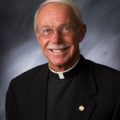
Transitions punctuate our collective experience. As a Jesuit I have always viewed transitions as opportunities to see afresh St. Ignatius’ insight about seeking and finding God in all places, people and things. It is hard to say when the moment of transition from university administrator to magazine publisher took place for me. Was it when I last glanced at Omaha’s revitalized riverfront or during a retreat in rural Wisconsin or at the moment I turned my own key in the door at America House in New York? Whenever it occurred, it ended a 40-year career in higher education and ushered in the unknown.
Over nearly four decades I have had the privilege of crafting opportunities for students to experience a Catholic Jesuit education, watching them become women and men of competence, conscience and commitment. Along the way these students, their parents and my colleagues befriended me, supported me and loved me. I have witnessed their weddings, marveled at their professional competence and generosity of spirit, baptized their children and buried their parents. The consolation comes in seeing the words of Pedro Arrupe alive in our graduates, noting that we celebrate our success “by what our students become.” More than a few of them have been agents of social change.
We all experience changes in life. As William Bridges notes in his book Transitions: Making Sense of Life’s Changes, change involves three interrelated elements: the ending, the neutral zone and the beginning. The ending comes before the beginning. So you might ask, what did I do between the ending of a career in academe and moving to New York? My response: Nothing! From July to November I lived in varying degrees within the neutral zone—bereft of old identities and former realities. It was an opportunity to see the world differently between one life phase and the next and to do so with renewed clarity and purpose.
My annual retreat was a discernment retreat—an affirmation that the next step was endorsed by the “Boss.” From the beginning this retreat was not routine. Over the week I never moved beyond the Spiritual Exercises’ first day’s prayer of gratitude for God’s gifts as I reviewed my spiritual odyssey across the years—faces, places, emotions, tears and laughter, successes and failures—and reaffirmed God’s generosity and love. On the fifth day of the retreat I told my director that a door had closed and, in complete freedom, another opened—the end of the ending.
For years I had planned a sabbatical trip to South America. I spent a month in Brazil, Argentina and Chile. I visited the Iguazu Falls, the Jesuit Reductions and the Estancias in Argentina. In Chile I was introduced to the legacy of St. Alberto Hurtado, S.J. It is a living legacy animating the university that bears his name in its attempts to build an educated middle class. That same charismatic spirit guides Mensaje, the magazine that he founded in 1951. Drawing on the experience of existing Jesuit-sponsored magazines—America and études—Hurtado summarized the purpose of his periodical: “This magazine will be neither literary nor pious, but rather more universal in scope. The project is an urgent one when you consider the lack of [Catholic] orientation especially among the young…. It will help awaken the conscience of the Catholic laity, incarnate the faith in daily life and present Catholic positions as reasonable and serious…. It will help destroy the artificial separation between faith and life.”
Just as Hurtado drew on America for his initial inspiration, I embrace his vision as I take on my new responsibilities as president and publisher of America. I believe this transition presents another graced opportunity to explore the observation of Jerome Nadal, S.J., that “the world is our house.”
This article appears in November 28 2011.

 Politics
 Faith
Faith Culture
 Vatican
 Scripture
 Podcasts