


The U.S. government has abruptly decided to end more than 60 years of relationship with Catholic Charities in the Archdiocese of Miami. This partnership began with Operation “Pedro Pan,” which, under the direction of a then-young Irish priest, Monsignor Bryant O. Walsh, helped resettle some 14,000 Cuban children sent alone to this country by desperate parents seeking to protect them from communist indoctrination.
Catholic Charities has offered services for unaccompanied migrant children ever since. People have continued to flee political turmoil and persecution across Latin America, a region that reliably experiences political and economic instability. Today, a facility in Palmetto Bay, named the Msgr. Bryan O. Walsh Children’s Village, can house up to 81 minors. The program assists in placing children in foster care, reuniting them with family members and providing supportive services.
The Archdiocese of Miami’s services for these unaccompanied minors have been recognized for their excellence and have served as a model for other agencies throughout the country but the program was recently stripped of federal funding and will be forced to shut down by July.
While it is true that the number of unaccompanied minors entering the United States has decreased so that some programs should reasonably be scaled back or even eliminated, it is still baffling that the U.S. government would shut down a program that it would be hard-pressed to replicate. The level of competence and excellence that Catholic Charities has achieved will be hard to match if and when a future wave of unaccompanied minors reaches our shores.
As U.S. House members Maria Elvira Salazar and Carlos A. Gimenez, both Republicans from Miami, wrote to the Office of Refugee Resettlement in April: “Reducing capacity in the very region most likely to receive these arrivals is not cost-effective, it is a strategic mistake. Catholic Charities provides what cannot be quickly replaced: trained staff, proven infrastructure and decades of expertise.”
Today these young people—boys and girls, infants to teenagers—are not much different from those Cuban children of more than 60 years ago. The desperation that has led the parents of today’s unaccompanied minors to send their children away is not unlike the desperation that motivated Cuban parents at that time.
And yes, many of these children do have loving parents. They had not been abandoned to the streets but forced into unaccompanied migration by the most dire circumstances. When I have celebrated Mass with them, the children knew their prayers, they could sing the hymns. These are mostly kids who were raised in homes where parents taught them to pray and took them to Mass.
The announcement of the ending of federal funding came at the same time the news cycle was filled with the dust-up between Pope Leo XIV and President Donald Trump. Clearly the disagreements between Washington and the Holy See on issues of peace and justice should have nothing to do with the defunding of Miami’s Catholic Charities unaccompanied minors program. Some have suggested that the administration’s decision to cut support for this program represents political retribution—hopefully, this is not true, although there have been recent other tensions between Catholic Charities efforts and some members of our current political leadership.
Before the last national election, some hard-right politicians in Texas and Florida falsely accused Catholic Charities of colluding with Mexican and Central American drug cartels in the trafficking of children. But in fact these children upon arrival to the United States became wards of the U.S. government. It is only then that Catholic Charities, because of its expertise and experience, has been asked by the government through the Office of Refugee Resettlement to care for these unaccompanied minors.
That agency, part of the U.S. Department of Health and Human Services, includes in its mission the promotion of the health, well-being and stability of unaccompanied alien children. This commitment alone should require a thorough review of the decision to shut down this legacy and signature program in Miami.
We pray that review takes place and that the decision to defund Catholic Charities in the Archdiocese of Miami is reversed. Whether it be for another month or for many years to come, the Catholic Charities program serving unaccompanied children from our regional neighbors will rely on its decades of expertise to deliver excellent care for these little ones.
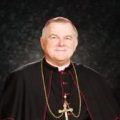
Editors’ note: This piece is adapted from a previously released statement by Archbishop Wenski.

 Politics
 Faith
Faith Culture
 Vatican
 Scripture
 Podcasts