


Having grown up in central New York State, not far from the Adirondack Park, I have always had a special place in my heart for the beauty of deciduous forests. The green trees and shrubs, the rolling hills and glacial valleys, the clear blue lakes and streams illustrate for me the truth of Gerard Manley Hopkins’s poetic vision, inspired as it was by the Franciscan John Duns Scotus, that “the world is charged with the grandeur of God.”
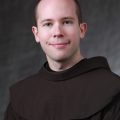
That a Franciscan friar is writing a column about creation may seem like a bad joke or a tired cliché. What’s next? My headshot replaced with a portrait in a birdbath?
But despite the apparent predictability of a Franciscan’s sentimental attachment to creation, there is something that touches me more deeply than the immediately recognizable beauty of the earth. When I am awestruck at the sunset over an Adirondack lake or turn the corner on a road that reveals a landscape that takes my breath away, I reflect on the place that we humans have in this world. This is in part because the landscape of upstate New York has shaped my theological imagination as much as it has informed my aesthetic preferences.
For a long time now theologians, pastoral ministers and environmental activists alike have decried the ways we have treated and continue to treat the earth. We are well aware of the effects of our hubris, like global climate change and pollution. We know that we have a responsibility to the earth and the rest of the created order, and this has developed beyond older interpretations of Scripture that justified a “dominion” approach to creation that advocated human sovereignty over land and animal. We have come to recognize that we are not “lords of the earth” but “stewards of creation.” But I have long wondered if this “stewardship” response is sufficient or even if it is correct.
I am not alone in my doubt about the popular “stewardship” tropes used, admittedly with good intentions, to talk about our relationship to the earth and the rest of its inhabitants. One well-known critic of this paradigm is the theologian Elizabeth Johnson, C.S.J. In Professor Johnson’s new book, Ask the Beasts: Darwin and the God of Love, she calls for a renewed look at the biblical, theological and scientific traditions that inform our understanding of ourselves and the rest of creation. She, like the theologians Ilia Delio, O.S.F., and John Haught, reads the work of Charles Darwin not as a threat to Christianity but as a resource for theology and for our effort to engage in faith seeking understanding. The result is a call for humanity to remember what has too often been forgotten: we are part of creation, not over and against it, not above or radically distant from it, as earlier conceptions of an anthropocentric universe suggested.
It is this insight that unsettles the standard stewardship approaches to creation. Rather than think about the whole of nonhuman creation as being entrusted to us, which makes us cosmic landlords or property managers for God, we should consider our inherent kinship with the rest of creation. In addition to the account of creation in the second chapter of the Book of Genesis, which reminds human beings that we are ha-adamah (“from the earth”), we also have extensive physiological evidence that supports Carl Sagan’s assertion that “we are made of starstuff.” We share the same building blocks as the rest of creation.
Yes, we are called to care for creation, but that care does not arise from some extrinsic obligation. Rather, this care should be grounded in our piety. The Latin pietas means duty or care for one’s family, which stems from a deep relational connection. The care we have for our children, parents and siblings should model how we think about and “care for creation.” In this sense, St. Francis of Assisi had it correct from the start. Each aspect of creation is our brother and sister; we are part of the same family, the same community of creation. In this sense, those who don’t live up to their creational family obligation are not very pious at all.
When I hike through the Adirondacks and find myself overwhelmed by the beauty of God’s creation, I am grateful to be a part of this community. The rest of creation cares for you and me; it is our duty to care for it as well. And that’s not just some romantic birdbath talk; it is what it means to be part of this extended family.
This article appears in July 21-28 2014.

 Politics
 Faith
Faith Culture
 Vatican
 Scripture
 Podcasts