Because we are so used to the Incarnation, of the child who came to live among us and the manner in which it happened, I think we take for granted its inevitability. It was not necessary. God could have redeemed humanity in some other way with more might, more power, more fireworks – think Hollywood action film, but on a cosmic scale.  God could simply wipe out humanity’s sin, just like that. He could have done that, or in any other way you might imagine, he could have done that.

He could also have sent his son, but not as an Infant, so weak, dependent and vulnerable, just like any other child subject to the vicissitudes of human living. He could have done it some other way. But this was the way that was best for us: that he come as an infant, a baby. This was the way that St. Anselm and St. Thomas Aquinas suggest was the best for humanity, for it indicated to us that God was not so great or transcendent that he would not deign to come to us. It shows us that our human nature, however much it troubles and haunts us, is worthy of redemption and good, for God took on this very nature. It shows us that God loves us as whole human beings, in the flesh, in need of development and love to reach our potential, and so he took on human nature. He is Emmanuel, God with us (Isaiah 7:14; Matthew 1:23), and he is the child Jesus.

John W. Martens

Follow me on Twitter @johnwmartens
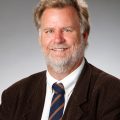
John W. Martens is an associate professor of theology at the University of St. Thomas, St. Paul, Minn,where he teaches early Christianity and Judaism. He also directs the Master of Arts in Theology program at the St. Paul Seminary School of Divinity. He was born in Vancouver, B.C. into a Mennonite family that had decided to confront modernity in an urban setting. His post-secondary education began at Tabor College, Hillsboro, Kansas, came to an abrupt stop, then started again at Vancouver Community College, where his interest in Judaism and Christianity in the earliest centuries emerged. He then studied at St. Michael's College, University of Toronto, and McMaster University, with stops at University of Haifa and University of Tubingen. His writing often explores the intersection of Jewish, Christian and Greco-Roman culture and belief, such as in "let the little children come to me: Children and Childhood in Early Christianity" (Washington, D.C.: The Catholic University of America Press, 2009), but he is not beyond jumping into the intersection of modernity and ancient religion, as in "The End of the World: The Apocalyptic Imagination in Film and Television" (Winnipeg: J. Gordon Shillingford Press, 2003). He blogs at  www.biblejunkies.com and at www.americamagazine.org for "The Good Word." You can follow him on Twitter @biblejunkies, where he would be excited to welcome you to his random and obscure interests, which range from the Vancouver Canucks and Minnesota Timberwolves, to his dog, and 70s punk, pop and rock. When he can, he brings students to Greece, Turkey and Rome to explore the artifacts and landscape of the ancient world. He lives in St. Paul with his wife and has two sons. He is certain that the world will not end until the Vancouver Canucks have won the Stanley Cup, as evidence has emerged from the Revelation of John, 1 Enoch, 2 Baruch, and 4 Ezra which all point in this direction.