In the technical breakdown of Pauline letters, which are simply Hellenistic letters with a Christianizing twist, they begin with a Salutation (senders, recipients, and grace) and then move on to the Thanksgiving (with the notable exception of Galatians). The Thanksgiving sets the tone for the letter and often telegraphs the intent and concerns of the letter. This portion of the letter is known as the Thanksgiving because it often begins with eucharisto, “I give thanks,” or “We give thanks” when Paul includes his co-writers.
The second reading for Thanksgiving, 1 Corinthians 1:3-9, includes the grace from the end of the Salutation (“Grace to you and peace from God our Father and the Lord Jesus Christ”) and then the Thanksgiving to the Corinthian Church:
“I give thanks to my God always for you because of the grace of God that has been given you in Christ Jesus, for in every way you have been enriched in him, in speech and knowledge of every kind—just as the testimony of Christ has been strengthened among you—so that you are not lacking in any spiritual gift as you wait for the revealing of our Lord Jesus Christ. He will also strengthen you to the end, so that you may be blameless on the day of our Lord Jesus Christ. God is faithful; by him you were called into the fellowship of his Son, Jesus Christ our Lord (1:4-9).”
Paul’s thanks for the Church in Corinth focus on the gift, the grace, they have been given through Jesus Christ, the faithfulness of God, and the fellowship we share in Christ. As we give thanks for our families and friends, our material blessings, a couple of days free from work (hopefully), let us also thank God for the grace given, God’s faithfulness and the fellowship we share with our brothers and sisters. Happy Thanksgiving!
John W. Martens
Follow me on Twitter @johnwmartens.
Related
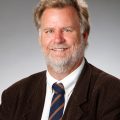
John W. Martens is an associate professor of theology at the University of St. Thomas, St. Paul, Minn,where he teaches early Christianity and Judaism. He also directs the Master of Arts in Theology program at the St. Paul Seminary School of Divinity. He was born in Vancouver, B.C. into a Mennonite family that had decided to confront modernity in an urban setting. His post-secondary education began at Tabor College, Hillsboro, Kansas, came to an abrupt stop, then started again at Vancouver Community College, where his interest in Judaism and Christianity in the earliest centuries emerged. He then studied at St. Michael's College, University of Toronto, and McMaster University, with stops at University of Haifa and University of Tubingen. His writing often explores the intersection of Jewish, Christian and Greco-Roman culture and belief, such as in "let the little children come to me: Children and Childhood in Early Christianity" (Washington, D.C.: The Catholic University of America Press, 2009), but he is not beyond jumping into the intersection of modernity and ancient religion, as in "The End of the World: The Apocalyptic Imagination in Film and Television" (Winnipeg: J. Gordon Shillingford Press, 2003). He blogs at www.biblejunkies.com and at www.americamagazine.org for "The Good Word." You can follow him on Twitter @biblejunkies, where he would be excited to welcome you to his random and obscure interests, which range from the Vancouver Canucks and Minnesota Timberwolves, to his dog, and 70s punk, pop and rock. When he can, he brings students to Greece, Turkey and Rome to explore the artifacts and landscape of the ancient world. He lives in St. Paul with his wife and has two sons. He is certain that the world will not end until the Vancouver Canucks have won the Stanley Cup, as evidence has emerged from the Revelation of John, 1 Enoch, 2 Baruch, and 4 Ezra which all point in this direction.
More by John W. Martens


 Politics
 Faith
Faith Culture
 Vatican
 Scripture
 Podcasts