

I found myself wondering how 2 Thessalonians 3:7-12 fit with Malachi 3:19-20a (often 4:1-2a in English translations) and Luke 21:5-19. Apart from thematic fit, I wondered how appealing Paul’s call for diligence in daily tasks could have been – and I am assuming Pauline authorship of 2 Thessalonians – in light of eschatological hopes and desires both then and now. But both the “fit” and the appeal, to me at least, are real and genuine. This is not to deny the reality of the coming end, and the glamour – I think this is the right word: “an irresistible alluring quality that somebody or something possesses by virtue of seeming much more exciting, romantic, or fashionable than ordinary people or things” (Encarta Dictionary: English (North America) – of considering and awaiting the cosmic renewal of Jesus’ second coming. As the earliest Christians cried, “Maranatha,” “Our Lord, Come!” I share that hope. But some Thessalonians, who seem to have thought the end had already come (2 Thess. 2:2) and so could ignore their daily, mundane tasks, or who, if they did not think the end had come, had nevertheless decided to expend their energy simply awaiting and contemplating the end to the exclusion of boring, ordinary work, needed to be reminded by Paul that the furnace in which Christian life is forged is the day to day life of loving our brothers and sisters in concrete ways. For the vast majority of us, these are the trials of walking the Christian path. It is important to note that 2 Thessalonians 3:7-12, in which people are told not to be idle (vv. 8, 11, 12) and to work for their bread (v.10), is not a screed about “welfare bums,” but a statement regarding those who would allow their contemplation of “greater” things to cloud and even negate their concern for their brothers and sisters in Christ. Instead of showing charity to their fellow Christians, some Thessalonians apparently were becoming a burden to the whole community. They had, it seems, more important things to do. Paul argues that concerns about eschatology and the coming end – whose reality he does not deny (see 2 Thess. 1:5-2:12) – do not lessen one’s responsibility to day to day concerns. And why should they? While the great eschatological trial is still to come, all of those Christians who came before us and those of us who are here today will sit before the judgment seat of Christ and answer for our ordinary daily lives. I know there is great suffering in the world: people enslaved in sexual bondage; women abused; martyrs for the faith and for truth; the victims of ugly racism. These people suffer heroically. Most of us suffer, however, the trials of ordinary life, of getting to work on time, of showing kindness to a spouse when tired and distracted, of caring for children, of loving our neighbor whom we might not like, of missing out on rewards that we might, we think, deserve. Life can be hard, even in its mundane manifestations. This is where we are called to live out our faith. Paul, to my mind, is telling the Christians of Thessalonica and us: every day is an opportunity to prepare yourself for eternity. So get to work. Share the burdens. Paul not only preaches this message to the Thessalonians, he points out that he lived this message (vv.7-9).The apostle who himself brought the Gospel to Thessalonica offers himself as a model. Next week, I want to offer some thoughts on Paul as a model of “imitation” in the Christian life. John W. Martens
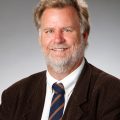
John W. Martens is an associate professor of theology at the University of St. Thomas, St. Paul, Minn,where he teaches early Christianity and Judaism. He also directs the Master of Arts in Theology program at the St. Paul Seminary School of Divinity. He was born in Vancouver, B.C. into a Mennonite family that had decided to confront modernity in an urban setting. His post-secondary education began at Tabor College, Hillsboro, Kansas, came to an abrupt stop, then started again at Vancouver Community College, where his interest in Judaism and Christianity in the earliest centuries emerged. He then studied at St. Michael's College, University of Toronto, and McMaster University, with stops at University of Haifa and University of Tubingen. His writing often explores the intersection of Jewish, Christian and Greco-Roman culture and belief, such as in "let the little children come to me: Children and Childhood in Early Christianity" (Washington, D.C.: The Catholic University of America Press, 2009), but he is not beyond jumping into the intersection of modernity and ancient religion, as in "The End of the World: The Apocalyptic Imagination in Film and Television" (Winnipeg: J. Gordon Shillingford Press, 2003). He blogs at www.biblejunkies.com and at www.americamagazine.org for "The Good Word." You can follow him on Twitter @biblejunkies, where he would be excited to welcome you to his random and obscure interests, which range from the Vancouver Canucks and Minnesota Timberwolves, to his dog, and 70s punk, pop and rock. When he can, he brings students to Greece, Turkey and Rome to explore the artifacts and landscape of the ancient world. He lives in St. Paul with his wife and has two sons. He is certain that the world will not end until the Vancouver Canucks have won the Stanley Cup, as evidence has emerged from the Revelation of John, 1 Enoch, 2 Baruch, and 4 Ezra which all point in this direction.
More by John W. Martens
 Politics
 Faith
Faith Culture
 Vatican
 Scripture
 Podcasts