


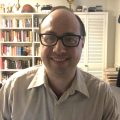
Bishop Milan Lach, S.J., is the fifth Byzantine Catholic ordinary of the Ruthenian Eparchy of Parma, covering several Midwestern U.S. states. Enthroned as bishop on June 30 at his cathedral in Ohio, the 44-year-old Jesuit (an ethnic Ruthenian from Slovakia) is now the youngest Catholic bishop to head a territorial diocese in North America.
Born 1973 in then-Czechoslovakia, Bishop Lach was ordained a priest in 2001. Before Pope Francis sent him to the United States to replace retired Bishop John Kudrick, he served as an auxiliary bishop of Byzantine Catholics in Presov, Slovakia.
The Ruthenian Catholic Church, established in Pittsburgh by Rusyn (Ruthene) emigrants from Eastern Europe, is one of 23 Eastern churches in communion with the larger Roman Catholic Church. The Eparchy of Parma serves 8,000 Ruthenian Catholics. Because Ruthenians and other Eastern Catholics following the Byzantine Rite remain so scattered in the Midwest, some of Bishop Lach’s individual parishes cover the territory of entire Roman Catholic dioceses, but remain canonically independent of local Roman bishops under the Code of Canons of the Eastern Churches.
I recently interviewed Bishop Milan by email about his new job and Pope Francis.
What is the vision of Pope Francis that you hope to bring to the Byzantine Catholics of your eparchy?
The vision is to save their souls for the Heavenly Kingdom.
How do you see your role as a European bishop serving in the United States?
I need, as a bishop, to be a disciple of Jesus Christ. This is important in the United States and also in Slovakia.
As a Jesuit, you have worked with Catholics in both the Roman and Byzantine rites. What does this background teach you about being a bishop in a country where Roman Catholics far outnumber Byzantine Catholics?
It teaches me that we are brothers and we need to help each other and respect each other. Our goal is the same.
Every vocation to priesthood, celibate or married, has value. We need to appreciate it. We need to follow our vocation from God.
Because the vast majority of U.S. Catholics worship in the Roman Rite, many of them don’t know about the Byzantine Catholic churches in union with Rome. With your parishes and liturgies resembling Eastern Orthodox Christianity, some Roman Catholics do not know the “Catholic” on your sign means they can receive the sacraments from your priests. How do you explain the Byzantine Rite to outsiders?
We are Catholics with the common heritage of our Orthodox brothers but in unity with the Holy Father in Rome.
How much does Ignatian spirituality inform your approach to being a priest and bishop?
Very much, I still feel like a Jesuit. And I am grateful for what I received from the Society of Jesus. I would like to say to all Jesuits: Thank you, brothers.
When Pope Francis appointed you bishop of Parma at age 44, you became the youngest Catholic bishop in North America to head a diocese. As a young priest, where do you look for help in navigating this responsibility?
As each priest and bishop does, I myself will look for help in Jesus Christ, my Savior and my Lord. He is with me.


In 2014, Pope Francis lifted the ban on married Eastern Catholic priests in the United States, but your presbyterate in the Eparchy of Parma still consists primarily of celibate priests. How do you intend to balance the role of married priests and celibate priests in the Eparchy of Parma moving forward?
Every vocation to priesthood, celibate or married, has value. We need to appreciate it. We need to follow our vocation from God.
What does the priesthood mean to you?
To serve others.
What are your hopes for the future?
Jesus Christ crucified and risen.
What do you want people to take away from your work as bishop of Parma?
I want them to have a relationship with Jesus Christ. I am not important.
If you could say one thing to Pope Francis right now, what would it be?
I pray for you and for your service.
What is your favorite scripture verse?
Luke 1:37: “For nothing will be impossible for God.”
Correction, Sept. 5: This article and headline originally stated that Bishop Lach is the youngest bishop in North America. In fact, he is the youngest bishop to head a territorial diocese.

 Politics
 Faith
Faith Culture
 Vatican
 Scripture
 Podcasts