


You might not want to watch “Taxi Driver” (1976) this week. In fact, considering recent news, the story of an angry loner using a gun to vent his inner agony on the world might be the last thing you want to watch. But “Taxi Driver,” directed by Martin Scorsese and written by Paul Schrader, is one of the best portraits of a uniquely American kind of alienation: a spiritual isolation that too often explodes into violence. Nearly 50 years since its release, it has only become more resonant. Maybe you don’t want to watch it this week; but maybe we need to.
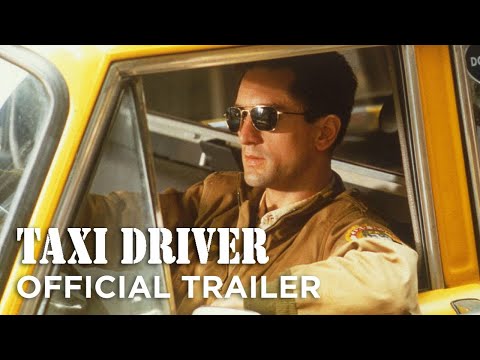
Travis Bickle (Robert DeNiro) can’t sleep. An awkward Vietnam vet, he wanders the city all night, tortured by an existential itch that he can neither name nor satisfy. “Loneliness has followed me my whole life,” he narrates. “Everywhere. In bars, in cars, sidewalks, stores, everywhere. There’s no escape. I’m God’s lonely man.”
Deciding to make some money from his predicament, he gets a job as a cabbie working the graveyard shift. The film is both set and filmed in New York City during its economic slump in the late 1970s: the walls are crusted with graffiti, the streets bathed in the neon light of porn theater marquees, the sidewalks littered with trash and people caught up in the city’s many vices. Travis sees it all from behind the wheel, describing it in his journal like an apocalyptic prophet: “Someday, a real rain will come and wash all this scum off the streets.”
He becomes fixated on Betsy (Cybil Shepherd), a campaign worker for a presidential candidate, viewing her from afar as pure and untouched by the city’s corruption. Travis convinces her to go on a couple of dates with him, but after Travis naively takes her to see an adult film she refuses to see him again. Travis takes the rejection personally and his shame curdles into rage. He has a friend put him in touch with a man who can sell him some guns. He begins to make plans.
At first, Travis intends to kill Charles Palantine (Leonard Harris), Betsy’s candidate. When the assassination plot fails, he decides to use his arsenal to rescue underage sex worker Iris (Jodie Foster) from her pimp, Sport (Harvey Keitel). But Travis isn’t motivated by politics or heroic ideals. In 1976, Schrader told Film Comment: “What he seeks is escape, to shake off the mortal chains and die a glorious death…. The redemption or elevation or transcendence he seeks is that of an adolescent—he’s simply striking out.”
All of his life, Travis has moved through the world like a specter, leaving no impression; violence, in his mind, is how he will finally make his mark. His attempts to connect with others fail (often because of his own intensity), and his one attempt to get help for his violent urges results in another cabbie telling him to not worry so much. Through this act of violence, Travis believes he will finally be seen.
I think that is true of most of the alienated young men who commit mass shootings, regardless of the ideologies they espouse. Those beliefs are a convenient outlet for the aimless anger that is already inside of them (and in the Internet age, that rage is only stoked by radical online groups and outrage-baiting pundits). Combine this alienation with effortless access to guns and a media culture that obsesses over violence, and the results are tragically predictable.
But it might be “Taxi Driver’s” final twist that offers its gravest warning for our times. After killing Iris’s pimp and two others, Travis is hailed as a hero. We imagine that if he had successfully killed a presidential candidate in Midtown, he would be seen as a monster; instead, he killed criminals in a poor neighborhood. After a violent incident, voices from across the political spectrum agree that violence is never an acceptable solution. But the lionization of Travis—like the real-life praise showered on Bernhard Goetz, Kyle Rittenhouse and others— shows that in America, the response to violence changes depending on its victims.
Ultimately, Travis is a prophet of a false savior: the man with the gun. He appears throughout American popular culture, discourse and history. He is the cowboy, the hero cop, Rambo, Dirty Harry. The lone man standing against chaos with his finger on the trigger, forcing the world back into its proper shape one bullet at a time. Only the man with the gun can keep us safe. But the truth is in Schrader’s assessment of Travis: All he really desires is death. In the end, that’s all this false savior has to offer.
“Taxi Driver” is streaming on the Criterion Channel and Kanopy.

 Politics
 Faith
Faith Culture
 Vatican
 Scripture
 Podcasts