


Twenty years ago next week, Hurricane Katrina swept through the Gulf Coast with unholy fury. In the Lower Ninth Ward, a majority Black and largely low-income area, levees burst and the Mississippi River spilled into the neighborhood, claiming homes, businesses and lives. The hurricane was a natural disaster, but the failure of the levees was a man-made one, indicative of the neglect that New Orleans’ poor neighborhoods had experienced for decades. That inequality would only grow more stark in the storm’s aftermath.
The most enduring cinematic works about Katrina are probably Spike Lee’s documentary series “When the Levees Broke” (2006) and “If God Is Willing And Da Creek Don’t Rise” (2010). Less remembered is Tia Lessin and Carl Deal’s “Trouble the Water” (2008), this week’s Catholic Movie Club selection. Nominated for Best Documentary Feature at the 2008 Academy Awards, the film follows a married couple from the Lower Ninth, Kimberly Rivers Roberts and Scott Roberts, as they try to piece their lives back together following the storm. We also see home video footage recorded by Kimberly, an aspiring rapper, of her experience in the Lower Ninth during the flooding.
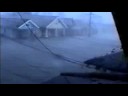
That footage is, as you can imagine, harrowing. The Roberts and their neighbors retreat to an attic as the floodwaters rise. They call 911 only to learn that police will not enter the area until the storm calms down: No one is coming to rescue them. With limited space in the attic, Kimberly realizes that she has to leave her dogs below to die (spoiler for the sensitive: they survive). When help finally comes, it’s in the form of a tall neighbor wading through the water with a buoyant punching bag, which he uses as a makeshift life preserver to ferry people to higher ground one at a time. The refugees attempt to shelter at a nearly vacant Navy base, only to be turned away at gunpoint (the Navy denies that this happened). Later, Kimberly learns that her sick grandmother died in the hospital because she wasn’t evacuated.
But the horror of those scenes is less frustrating than what follows. The Roberts and their neighbors lose everything, and then have to jump through bureaucratic hoops to receive promised relief checks. They watch as New Orleans rebuilds the tourist areas and the Lower Ninth remains a wasteland. The poor have been left behind again. Reflecting on the experience in disgust, Kimberly’s cousin tells her: “Our government is supposed to be one of the greatest but…if you don’t have money and you don’t have status, you don’t have a government.”
What lessons does “Trouble the Water” hold, 20 years after the storm? While watching, I reflected on how it may be impossible, as the impact of climate change intensifies, to distinguish between “natural” and “man-made” disasters. When the damage of a natural disaster is compounded by human negligence, greed and injustice, how can we not call it man-made? The experience of Kimberly and her family is echoed in today’s climate refugees, forced to flee their homes because of the damage we have done to our planet and receiving no warmer welcome than the refugees of Katrina.
Certainly, the film is great fuel for righteous rage, but it is also—almost paradoxically—a story of hope. “Trouble the Water” offers a thrilling portrait of people in the most desperate of circumstances surviving against all odds and taking care of others while doing it. Kimberly clings to her faith, her art and her neighbors to get through, and what grace any of the film’s subjects find, they find through one another. Even as the floodwaters rise, they make each other laugh and perform small acts of kindness and encouragement. “Trouble the Water” will destroy your faith in human systems (if you have any left), but it may very well restore your faith in the human spirit.
“Trouble the Water” is streaming on Kanopy and Kino Film Collection


 Politics
 Faith
Faith Culture
 Vatican
 Scripture
 Podcasts