


A reflection on St. Paul’s complex teachings regarding the Torah and Jesus’ own words
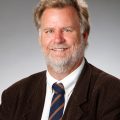
John W. Martens
John W. Martens is an associate professor of theology at the University of St. Thomas, St. Paul, Minn,where he teaches early Christianity and Judaism. He also directs the Master of Arts in Theology program at the St. Paul Seminary School of Divinity. He was born in Vancouver, B.C. into a Mennonite family that had decided to confront modernity in an urban setting. His post-secondary education began at Tabor College, Hillsboro, Kansas, came to an abrupt stop, then started again at Vancouver Community College, where his interest in Judaism and Christianity in the earliest centuries emerged. He then studied at St. Michael's College, University of Toronto, and McMaster University, with stops at University of Haifa and University of Tubingen. His writing often explores the intersection of Jewish, Christian and Greco-Roman culture and belief, such as in "let the little children come to me: Children and Childhood in Early Christianity" (Washington, D.C.: The Catholic University of America Press, 2009), but he is not beyond jumping into the intersection of modernity and ancient religion, as in "The End of the World: The Apocalyptic Imagination in Film and Television" (Winnipeg: J. Gordon Shillingford Press, 2003). He blogs at www.biblejunkies.com and at www.americamagazine.org for "The Good Word." You can follow him on Twitter @biblejunkies, where he would be excited to welcome you to his random and obscure interests, which range from the Vancouver Canucks and Minnesota Timberwolves, to his dog, and 70s punk, pop and rock. When he can, he brings students to Greece, Turkey and Rome to explore the artifacts and landscape of the ancient world. He lives in St. Paul with his wife and has two sons. He is certain that the world will not end until the Vancouver Canucks have won the Stanley Cup, as evidence has emerged from the Revelation of John, 1 Enoch, 2 Baruch, and 4 Ezra which all point in this direction.

Posted inThe Word
Subjects, Not Objects
Ancient Roman society was profoundly hierarchical and this can grate on readers today when they encounter certain biblical passages Prime among these are ancient household codes which delineate the duties and responsibilities of family members to one another Part of the purpose of these passages

Posted inThe Good Word
Stephen’s Martyrdom
This is the twenty-second entry in the Bible Junkies Online Commentary on the Acts of the Apostles This entry considers Stephen rsquo s martyrdom For previous entries please now go to the Complete Acts of the Apostle Commentary where you can find links to each of the entries updated after each ne

Posted inThe Word
Gospel: you are what you eat.
You are what you eat There is some truth to this in the physical sense as the bloated Western diet can lead us to heart disease and obesity while more nutritious and moderate eating can lead to better health and more energy Yet every physical food in moderation can be transformed into necessar

Posted inThe Word
A Sense of God
As infants prior to the coming of speech we communicate with sounds gestures and facial expressions Long before we can speak to our mothers fathers or older siblings we fall in love with them It is a tactile love based upon the senses of touch hearing smelling and seeing What if this is h

Posted inThe Good Word
Stephen Condemns the Council
This is the twenty-first entry in the Bible Junkies Online Commentary on the Acts of the Apostles This entry concludes Stephen rsquo s speech before the council For previous entries please now go to the Complete Acts of the Apostle Commentary where you can find links to each of the entries update

Posted inThe Word
No One Should Have Nothing
A couple of days before the release of Pope Francis rsquo encyclical ldquo Laudato Si rsquo rdquo a neighbor and I were discussing rumors about the encyclical and what it might contain concerning the state of the earth and economic systems It was an intriguing conversation because my neighbor
Posted inThe Word
Hunger for the Truth
There is a fine line between having what we need to sustain our physical existence and feeling we just do not have enough Or is that line the one where we want more and more Once we cross that line as individuals and as societies to where our most notable identification is as a consumer it can

Posted inThe Good Word
Stephen presents Joseph and Moses as “types” of Jesus
This is the twentieth entry in the Bible Junkies Online Commentary on the Acts of the Apostles This entry continues Stephen rsquo s speech before the council For previous entries please now go to the Complete Acts of the Apostle Commentary where you can find links to each of the entries updated a

Posted inThe Word
Where Do You Live?
Jesus sends apostell his messengers apostoloi out into the world to share his message and his ministry but the sending of the apostles is not so much about traveling vast distances as it is about being present for the people around them Wherever you live that is the place evangelization occ