


If you’ve been praying for any length of time, you might have heard about the practice of spiritual direction. So you might wonder: What is it? And is it for me?
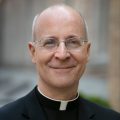
James Martin, S.J.
The Rev. James Martin, S.J., is a Jesuit priest, author, editor at large at America and founder of Outreach.

Posted inExamen, Faith
God meets people where they are
God meets people where they are. For some people, God meets them through relationships, with others through books; with others through nature. Maybe this week you can look around to see the very personal and unique ways that God encounters you and invites you to believe.

Posted inExamen, Faith
The Sacred Heart is an invitation to ask ourselves, ‘How did Jesus love?’
The Sacred Heart is an invitation to ask ourselves, “How did Jesus love?

Posted inExamen, Faith
St. Augustine’s puzzle: how can we understand the Trinity?
The great scholar just couldn’t get his mind around this great mystery.

Posted inFaith, Short Take
Listen to the L.G.B.T. person: a response to the Vatican’s gender theory document
The Congregation for Catholic Education’s new document on ‘gender theory’ is a welcome invitation to dialogue. But it also contradicts science and ignores the real-life experience of L.G.B.T. people, Fr. James Martin, S.J. writes.

Posted inExamen, Faith
Can you be attentive to the presence of God in nature?
As Jesus passed through the beautiful landscape of Galilee, how could he not have enjoyed the flowers and the trees, and seen the Father’s hand in nature?

Posted inExamen, Faith
Jesus is calling us to new life. But first, we need to let old habits die.
Dying and rising should be happening all the time for us. And in us. It’s a way for us to participate in the beautiful mystery of the Resurrection, during the Easter season, and every day.

Posted inExamen, Faith
Embrace the resurrection in those around you
Part of embracing resurrection and new life is embracing it not only in Jesus, not only in yourself, but in those around you.

Posted inExamen, Faith
God brings us many little resurrections, every day
God is continually inviting us to growth and continually enabling us to let some things in our life die so that we can experience new life.

Posted inFaith, Short Take
The Case Against Abolishing the Priesthood
The problem is not the priesthood; the problem is clericalism.