


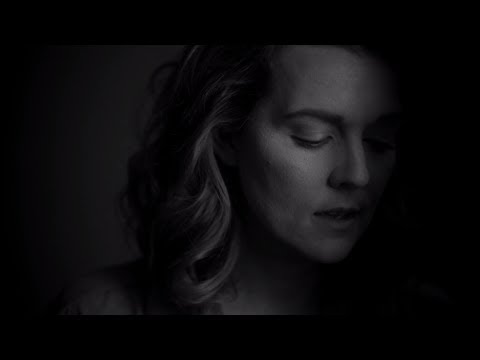
Brandi Carlile’s album, “By the Way, I Forgive You,” which is nominated for six Grammys this Sunday, explores the baggage of broken relationships, the plight of marginalized people, suicidal loneliness, the attractions of fear, and the resiliency of the devil. “There are days when I will let the darkness rise,” she sings on the track, “Harder To Forgive.” Carlile offers no formulaic evasions of life’s difficulties. This is not to say the record (nominated for Album of the Year, Song of the Year and Record of the Year among others) is a downer, only that it yearns for a deeper kind of solace.
Carlile recently told Rolling Stone that she and her co-writers, Phil and Tim Hanseroth, had all reached points in their lives where quick fixes could no longer measure up to life’s accumulating debris. “You can do any number of things with that,” she said, “but what we chose to do is to talk about finding a way to fundamentally forgive and accept life for being f***ing hard.” On the album, forgiveness is a radical act that requires seeing life for what it is, in the hope that honest anguish will find an unforeseen balm.
This acceptance of life’s untidiness and struggle echoes ancient biblical sensibilities. In Scripture, those who affirm God’s trustworthiness and fidelity in exemplary ways are precisely those who also sing the drama and the trauma of human life. Empires explain and evade; prophets cry and sing. The former tactic relies upon a kind of order that the Bible exposes as “madness masquerading as control,” to quote Old Testament scholar Walter Brueggemann.
Still, if the masquerade is effective at numbing us to pain, why would we opt for honest anguish? What is there to gain from probing life’s wounds?
What is there to gain from probing life’s wounds?
I think of “By the Way, I Forgive You” as a response to questions like these. It illuminates pain, especially the pain of those marginalized by exclusionary categories. It affirms their forgotten dignity. On the instantly memorable song, “The Joke,” Carlile imagines the pain of boys and girls constrained by expectations around gender:
You’re feeling nervous, aren’t you, boy?
With your quiet voice and impeccable style
Don’t ever let them steal your joy
And your gentle ways, to keep ’em from running wild
The song offers reasons to trust that life does not actually work the way victimizers think it does. It’s not a strategy for one-upping an oppressor, but a declaration that living by dominating others is ultimately a dead end, a message delivered in the startlingly powerful crescendo of the chorus:
Let ’em live while they can
Let ’em spin, let ’em scatter in the wind
I have been to the movies, I’ve seen how it ends
And the joke’s on them
What the abusers and the power-hungry treat as reality, is in fact an apparition of fear, a joke.
In Raids on the Unspeakable, Thomas Merton explains that “if we think our mask is our true face, we will protect it with fabrications even at the cost of violating our own truth.” This is Carlile’s joke: what feels properly self-assertive to us, in the mode of controlling and manipulating others, is in reality an empty assertion. We fear losing our grip on this emptiness only because we imagine that to lose the esteem of the powerful is to lose everything. Carlile’s album sings of and to this fear, the fear that won’t admit it is just spinning in the wind.
To be transformed, of course, human fear needs not only exposure but tenderness, a vision of solace even in the absence of control. The most tender suggestion of life’s ultimate trustworthiness on Carlile’s album is “The Mother,” a song about becoming a parent (Carlile and her wife now have two daughters). The song provides a different angle on the same joke, the joke that what we think is most important is often a distraction from true joy.
The first things that she took from me were selfishness and sleep
She broke a thousand heirlooms I was never meant to keep
She filled my life with color, canceled plans, and trashed my car
But none of that was ever who we are
The curse of parenthood is that, if you take it seriously, the center of things inevitably shifts away from your agenda. The gift of parenthood, of this very curse, is that our agendas are often full of things we were “never meant to keep.” This is by no means to say that children only limit our lives in positive ways. The world goes on, “The New York streets are busy as they always used to be,” Carlile sings; being responsible for a child means a lot of it is now happening without you. That is a loss and it would be silly to pretend otherwise. But then again, as Carlile sings to her daughter,
Oh, but all the wonders I have seen, I will see a second time
From inside of the ages through your eyes
Without denying the painful limits inherent in any human life, the song here insists that the gifts of such a life are beyond measuring. The point is not that our aspirations are bad, but that they need to be purged of their madness. Fundamentally, that madness is unforgiveness, our unwillingness to trust life as it is given, even when it exceeds our agenda for it.

“The Mother” shines a spotlight on the familiar moments when we become suddenly grateful for what our former selves would call failures but we now receive as mercy. In such moments, we become able, in our own ways, to sing along with Carlile,
They can keep their treasure and their ties to the machine
’Cause I am the mother of Evangeline
Life will always prove an unwieldy thing to corral with our certitudes. To reject this truth is to diminish the dignity of others as well as the truth of our own lives. Conversely, to accept life as it is means to accept our inevitable failure at the control game—to own up to the cracks in our masks.

This is a traumatic admission, no doubt. But what Carlile’s album proposes is that these very cracks let us see the light in others and in ourselves, light we might otherwise ignore. To pretend otherwise is not true solace, but a joke. Don’t fall for it.
This article appears in March 18 2019.


 Politics
 Faith
Faith Culture
 Vatican
 Scripture
 Podcasts