


My friend Liza Colón-Zayas is the first guest on “The Spiritual Life” podcast who is, by her own admission, an agnostic. Raised by a devout Catholic mother in New York City, Liza fell in with a Christian cult (which moved her to Philadelphia, away from her friends and family) and then found her way out. Her brother, as she shares on our show, was also a victim/survivor of sexual abuse by a priest. Today this successful actor, perhaps best known for her Emmy-award-winning performance as Tina on the Netflix series “The Bear,” lives what she describes as a spiritual life but is not sure if she believes in God or not.
The aim of “The Spiritual Life” is to share stories of people’s relationship with God in their prayer and in their daily life. But we thought it was important to include a voice like Liza’s because for some people, doubt is where they end up on their spiritual journey.
Doubt is a natural part of the spiritual life. Just ask the Apostle Thomas. In a more modern vein, I don’t know anyone who, when faced with life’s challenges, has not doubted if not the existence of God then at least whether God cares for them. I went through a months-long distancing from God in college after a friend was killed in a terrible car crash. At his funeral, I thought: Why would I want to believe in a God who kills my friends? In our conversation, Liza and I talk about what theologians and philosophers often term the “inconsistency” of Christian belief on suffering.
That is: If God were all-good, then God would want to eliminate all evil. If God were all-powerful, then God could, presumably, eliminate all evil. But because there is evil in the world, God is either not all-powerful or not all-good. But God cannot be, by that logic, both.
That is how I felt sitting in the pew of that church. Why would I want to believe in a God like this? A few months later, though, another friend, an evangelical Christian, told me that rather than being angry about our friend’s death, she was grateful for his life. Her response prompted a subtle shift in me and enabled me to believe in a God that I did not understand. That is where I am today: a believer, of course, but someone who doesn’t try to understand God’s ways.
I love these lines from the Book of Isaiah: “For as the heavens are higher than the earth/ so are my ways higher than your ways/ and my thoughts than your thoughts” (55:9). For some people, they may seem like pabulum or an excuse. For me, they are reality.
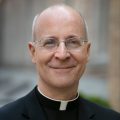
Of course, I hope that all atheists and agnostics, like Liza, will eventually find their way to God. That is part of my ministry as a Jesuit priest. But even if they don’t, I will continue to accompany them. That is part of my ministry, too.

 Politics
 Faith
Faith Culture
 Vatican
 Scripture
 Podcasts