

There is no getting around it: if you grew up as a Protestant or an Anabaptist, Mary is often a confusing figure. Not, I would say, an essentially divisive figure, not a troubling figure, but confusing. The confusion stems from how to accept Mary. There is a sense that Roman Catholics say too much about Mary, whether doctrinally – Immaculate Conception, the Assumption, Theotokos – or visually – too many notes, I mean, statues – and theologically – are they worshiping this woman? Who is she? Yet, this I think can be coupled with a sense that from a Protestant or Anabaptist perspective not enough is being said about Mary given the scriptural record. Does Christ the sole mediator of salvation mean no one else who appears in the New Testament is even worthy of theological consideration or honor? Sometimes it seems that way. Last year in Rome a family member, who is not Catholic, asked my youngest son why the Church of St. Paul-Outside-The-Walls was named in honor of Paul; after all, we did not worship Paul did we? This sort of question is rather constant, as every member of my family and my wife’s family is something other than Catholic, generally Mennonite or Baptist. It is inevitable, too, that if family members accompany the lone Catholics to Church, the Priest will speak about the authority of the Pope, the Tradition of the Church or….Mary…definitely Mary. But if I am to consider Mary from a position not as a convert to Catholicism, but as some sort of generic Christian biblical scholar, Mary cannot simply be ignored. As Paul says, Jesus was sent by God to be “born of a woman” (Gal.4:4-7). Why this woman? We are all chosen, of course, to live out God’s will, but this is a remarkable vocation, to be asked to bear the son of God. Let me suggest, this is an extraordinary woman, indeed, in the true sense of the word, a unique woman. As Luke’s Gospel tells us, Mary was the mother who, upon learning the true nature of her son,”kept all these things, reflecting on them in her heart” (Luke 2: 16-21). More than that, she was the woman who knowing all of these things, fed him, changed his clothes, cuddled him, nurtured him and loved him. She was chosen to bring to full human life God’s only son. Think about that and see if that doesn’t take your breath away, at least figuratively or spiritually. The vocation to motherhood, or fatherhood, is a tremendous calling, but Mary’s call is…astounding? Miraculous? Amazing? It is difficult to find the right word. However difficult it is to find the right word, though, I will spend some time reflecting on her and on her life on this day, the Solemnity of the Blessed Virgin Mary. I sometimes find myself turning away from her when I enter homes filled with cheap and garish statues of Mary, by my reckoning, and stacks of books detailing ever more and newer apparitions. I find my Mennonite upbringing rising in me and a sort of queasiness with visual religious representations floods over me. Yet, I know there is more than one way to commune with God, more than one way to pray, more than one way to show honor. When I truly consider Mary, I cannot turn away from her. I am drawn closer to her. For she was the Mother of God, in some real and profound way, as Church tradition stated so many years and Church Councils ago, and as Popes proclaimed. And, of course,yes, as Scripture narrates. John W. Martens
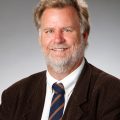
John W. Martens is an associate professor of theology at the University of St. Thomas, St. Paul, Minn,where he teaches early Christianity and Judaism. He also directs the Master of Arts in Theology program at the St. Paul Seminary School of Divinity. He was born in Vancouver, B.C. into a Mennonite family that had decided to confront modernity in an urban setting. His post-secondary education began at Tabor College, Hillsboro, Kansas, came to an abrupt stop, then started again at Vancouver Community College, where his interest in Judaism and Christianity in the earliest centuries emerged. He then studied at St. Michael's College, University of Toronto, and McMaster University, with stops at University of Haifa and University of Tubingen. His writing often explores the intersection of Jewish, Christian and Greco-Roman culture and belief, such as in "let the little children come to me: Children and Childhood in Early Christianity" (Washington, D.C.: The Catholic University of America Press, 2009), but he is not beyond jumping into the intersection of modernity and ancient religion, as in "The End of the World: The Apocalyptic Imagination in Film and Television" (Winnipeg: J. Gordon Shillingford Press, 2003). He blogs at www.biblejunkies.com and at www.americamagazine.org for "The Good Word." You can follow him on Twitter @biblejunkies, where he would be excited to welcome you to his random and obscure interests, which range from the Vancouver Canucks and Minnesota Timberwolves, to his dog, and 70s punk, pop and rock. When he can, he brings students to Greece, Turkey and Rome to explore the artifacts and landscape of the ancient world. He lives in St. Paul with his wife and has two sons. He is certain that the world will not end until the Vancouver Canucks have won the Stanley Cup, as evidence has emerged from the Revelation of John, 1 Enoch, 2 Baruch, and 4 Ezra which all point in this direction.
More by John W. Martens
 Politics
 Faith
Faith Culture
 Vatican
 Scripture
 Podcasts